The Personality Behind the Projects: Paige Terrell, IIDA
Posted October 02, 2026 · Education

A Conversations with the Princpal & Dallas Studio Director of RSM Design
Twenty-seven years ago, RSM Design opened its doors in Dallas. Today, the studio is led by Paige Terrell, IIDA, a Dallas native who spent nearly two decades in corporate interior design before finding her way into environmental graphic design. Ahead of this year’s TxA Design Expo, we sat down with Paige to talk about the moment that evolved her career, what it means to lead a studio with this kind of history behind it, and what keeps her passionate about designing for Texas.
Let’s start at the beginning. You spent years in corporate interior design before finding your way to environmental graphic design. What was the moment you realized storytelling in physical space was the work you wanted to build a career around?
There was a point in my career when I began thinking more intentionally about the projects that had been the most meaningful to me and what they had in common. I realized I was always most engaged when design went beyond solving a functional problem and became a way to tell a story.
One project that really resonated with me was a regional headquarters for AAA. Early in the process, we toured their facility and learned about the history of the organization, its connection to road travel, signage, journeys, and helping people navigate from one place to another. That story became the foundation for the design. A carpet pattern referenced tire treads, chandeliers recalled the form of oil filters, and even the planning and movement through the space were influenced by the idea of a road trip. The presentation was choreographed to invite the client to imagine packing their bags and coming along for the journey. The narrative wasn’t something applied at the end; it shaped the entire experience.
What stayed with me most was hearing from an employee after the project was complete. She simply said how much she loved the space. She may not have been able to identify every design decision or reference, but she could feel that the environment had been thoughtfully created for her. That was a defining realization for me. The most powerful spaces communicate something before someone ever has to explain them. That connection between story, place, and human experience is what ultimately drew me toward environmental graphic design, and it continues to be something I look for in every project.
How did that realization actually lead you to EGD as a field?
Around that same time, I came across a job description for a Director of Branded Environments, and reading it stopped me in my tracks. I didn’t realize there was a career path which focuses on a specific component of interior design that I enjoy so much. When I was in college our choices were Architecture, Interior Design and Graphic Design. Never did I realize you could combine them!
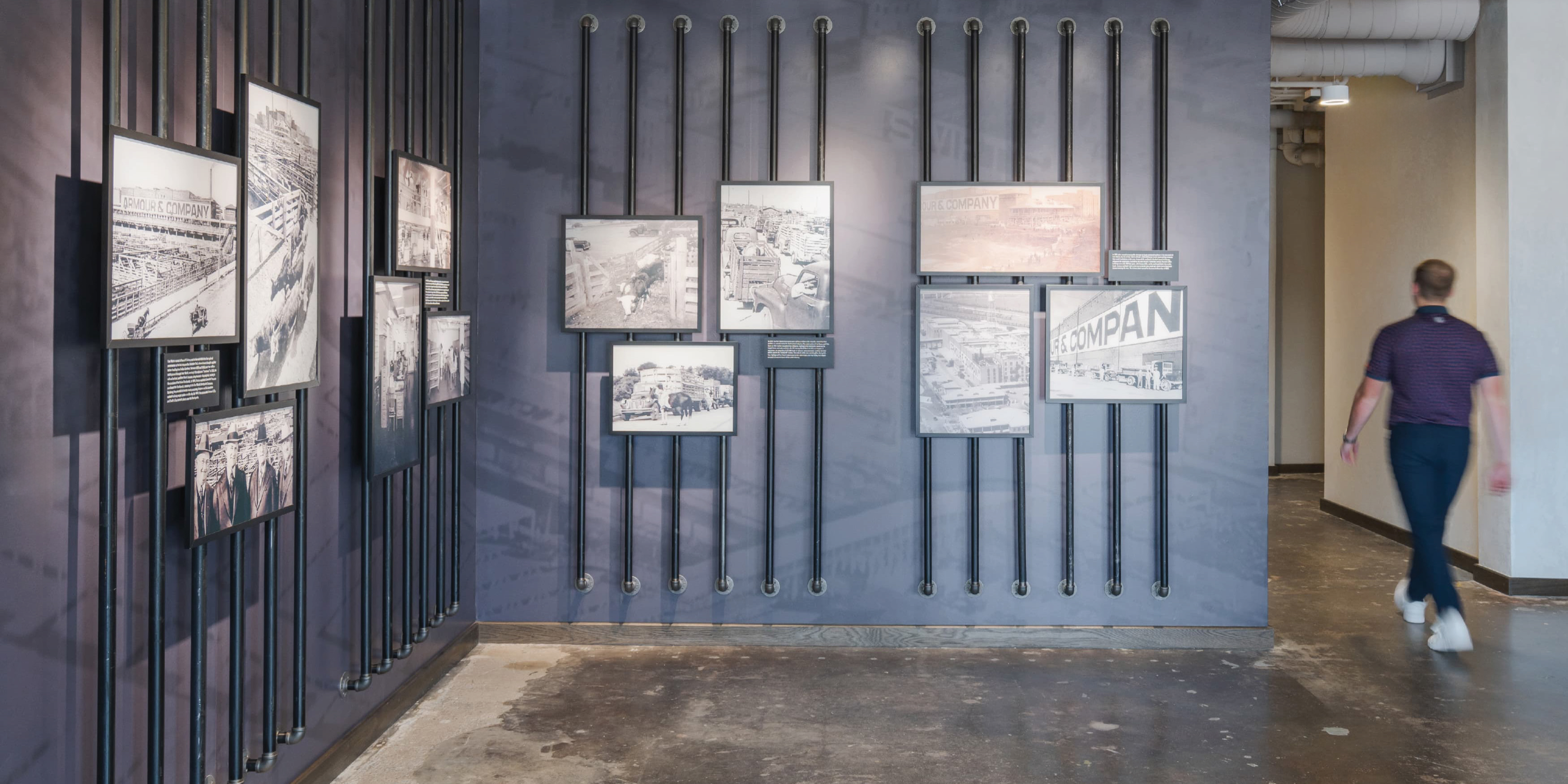
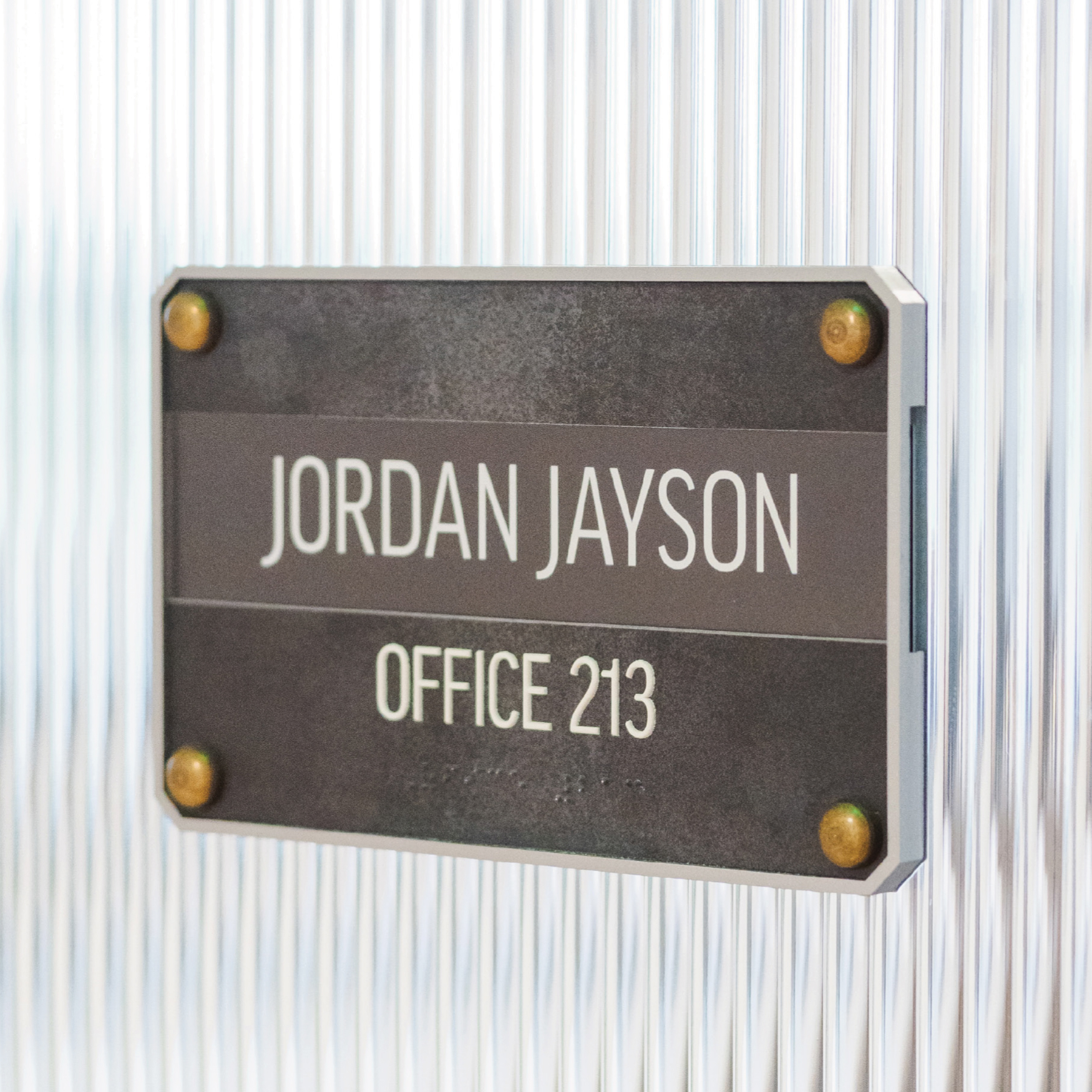
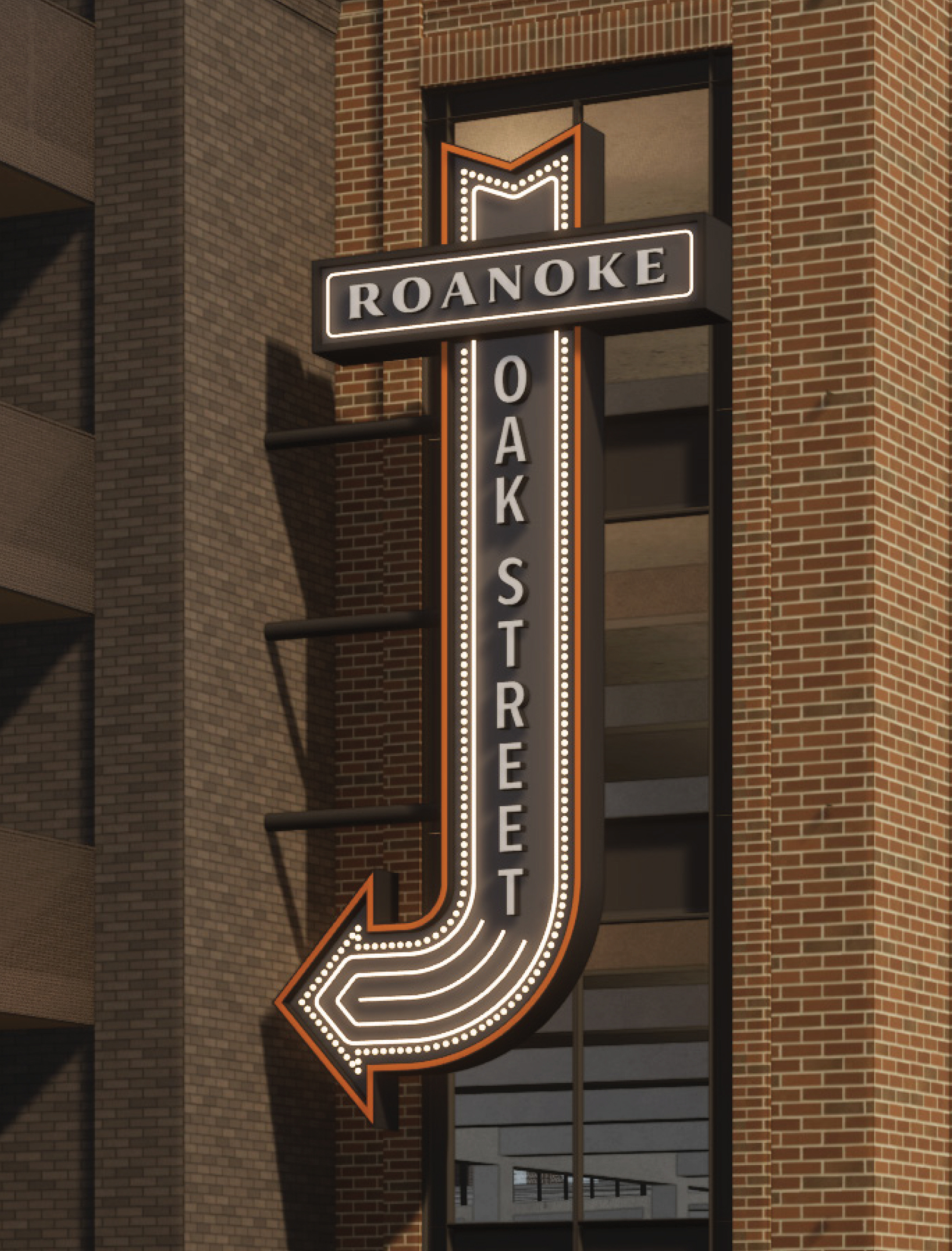
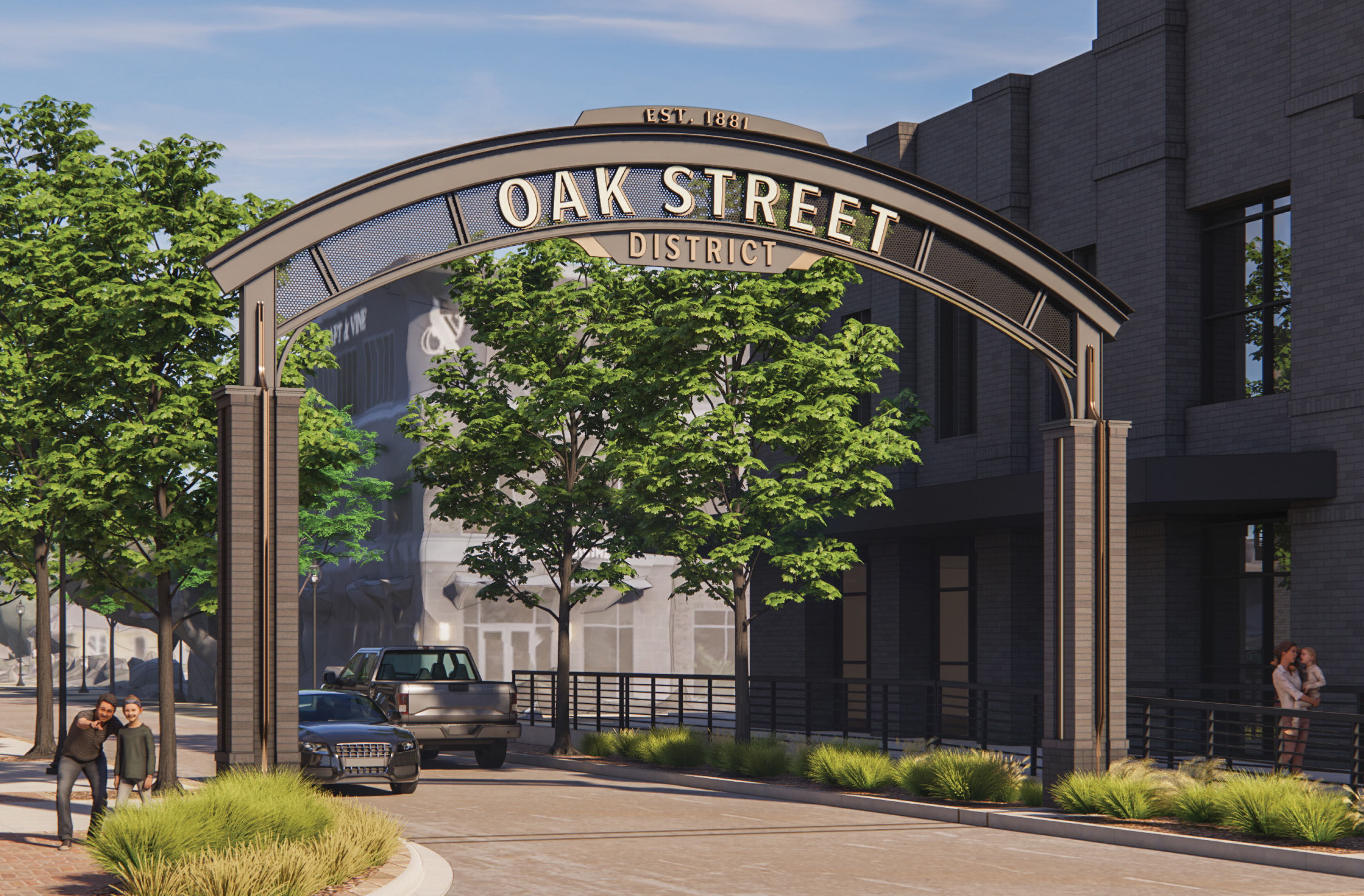
The Armour Building, Fort Worth, TX (top row), Roanoke Oak Street District, Roanoke, TX (bottom row)
Was interior design always the plan, or did you find your way there?
A bit of both. Growing up, I loved to draw, I loved math, and I was always trying to solve problems, usually by redesigning my own bedroom every six months, much to my mother’s frustration. I remember one Thanksgiving telling her it would be great if our countertop had a vertical waterfall edge that folded up to offer a horizontal surface with barstools when we needed extra seating, then folded back down when we didn’t. I was always inventing ways to make spaces more accommodating for the people who use it.
The intersection of graphic design with interior design is what was unplanned. In college, I took a graphic design course as an elective. My instructor was Michael Tatum, a well known designer of architectural interiors, graphics, and furniture. Our first assignment was pinned to the wall anonymously while Mr. Tatum critiqued each one. He stopped at mine and gave my submission a surprisingly glowing review and asked the owner to identify themselves. By the end of the semester, on my final scorecard, he wrote that I should evolve from interior design and become a graphic designer. With graduation in my sights, I didn’t heed his advice and stuck with interior design. I still have his note, and all these years later, here I am at the exact convergence of what I originally studied and what he saw in me back then.
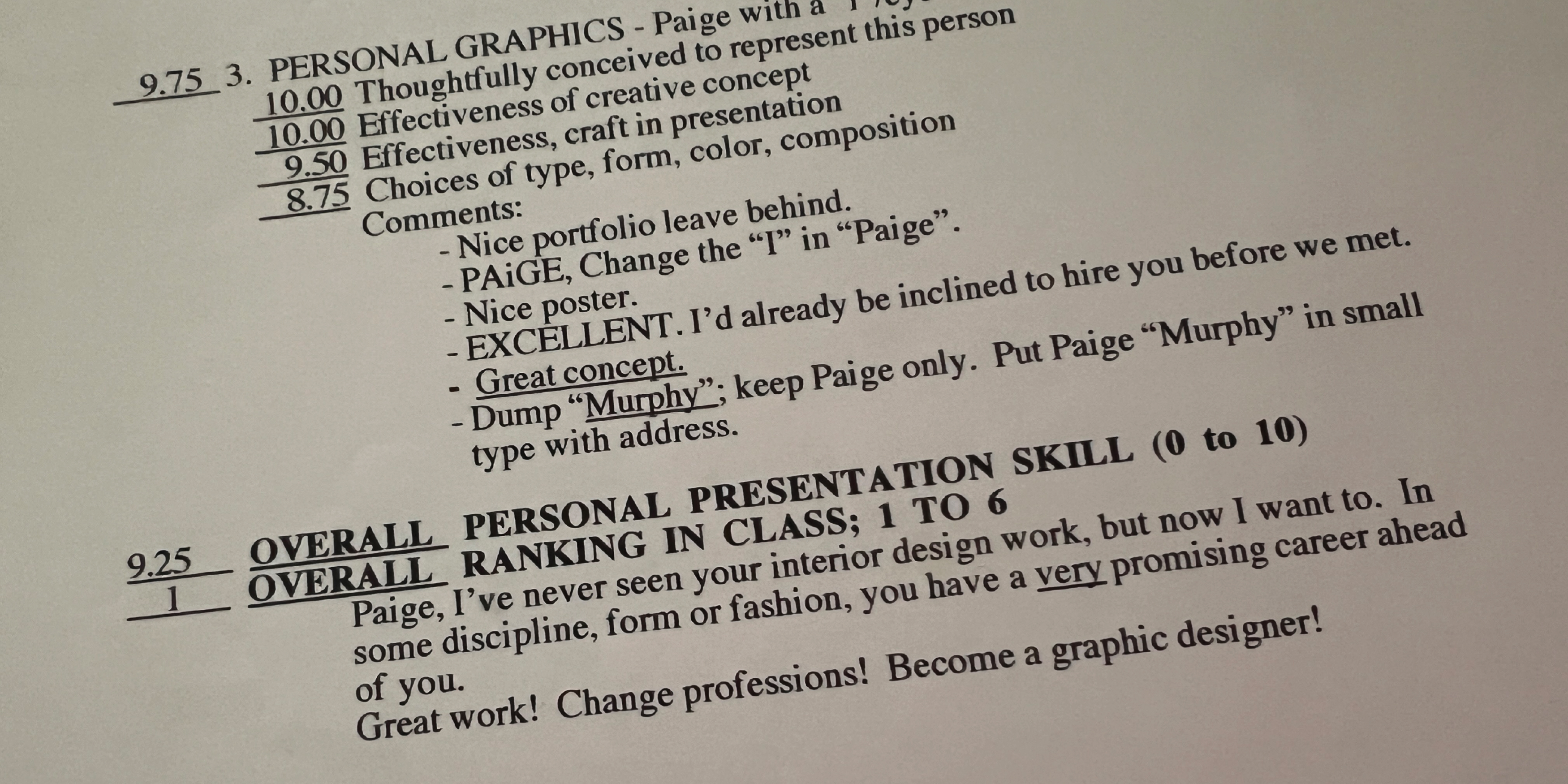
Michael Tatum’s Critique Feedback on Paige’s Class Assignment
As Director of the Dallas studio, how would you describe your leadership style?
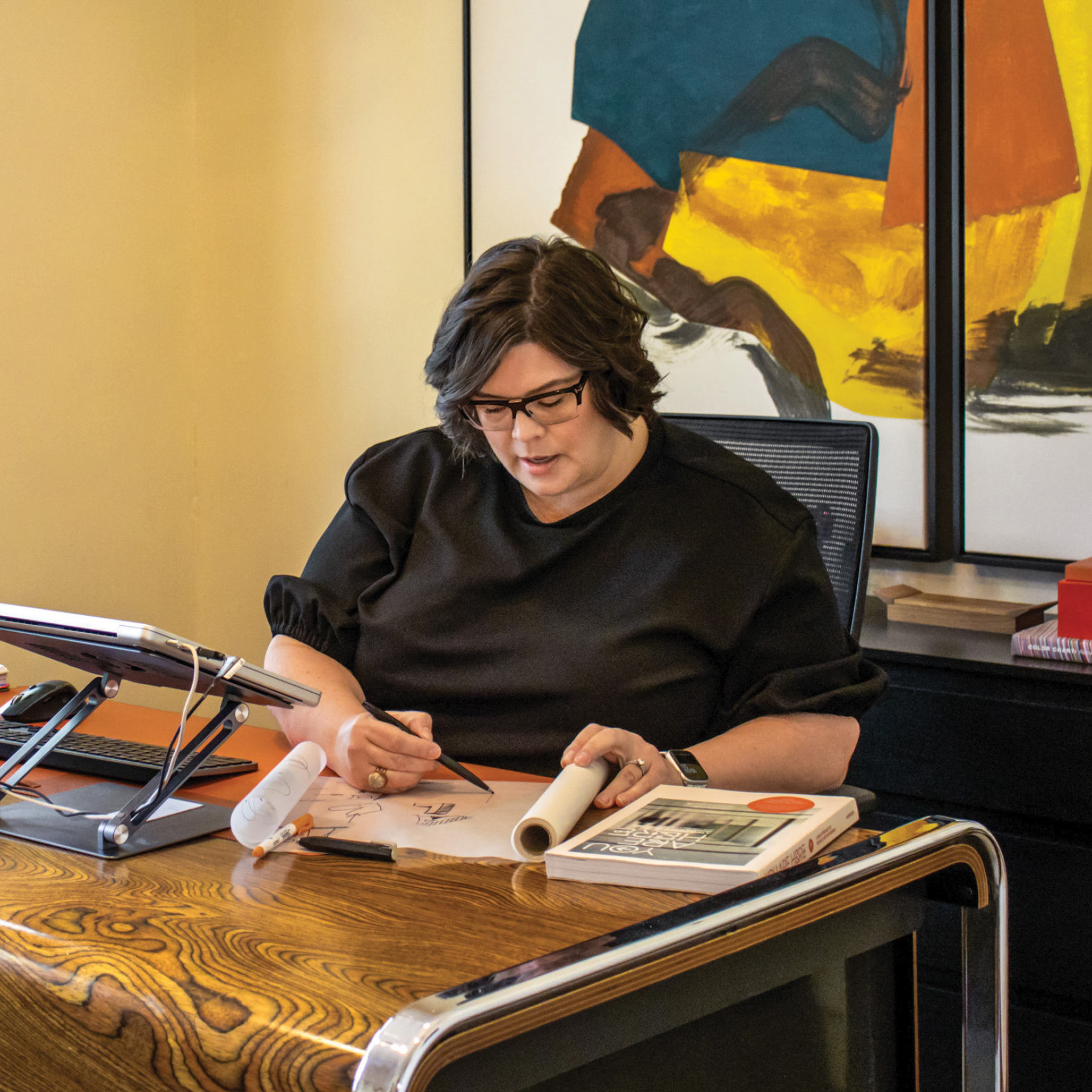
Approachable, and team-based. I try not to lead from a place of authority for authority’s sake. I dislike being called “the boss.” I’m part of the team, and I try to bring what experience I have to the table the way anyone else brings their skills. When something goes wrong, I’d rather work through it together than just hand someone the answer, because that’s how people learn to solve the next challenge themselves.
Where did that style come from?
A lot of it came from watching how other people led, and paying close attention to what worked and what didn’t. My dad always told me “you get more flies with honey,” and that’s stuck with me. I’ve also spent most of my career working closely with female leadership, which wasn’t something I sought out, including at RSM Design, which is women-owned. I think that shaped a relationship-first leadership style.
What it comes down to is learning to communicate differently with different people. Some people want bullet points. Others want the full story, the setup and the payoff. Learning to read that and adapt to it, rather than expecting everyone to meet you where you are, is most of what leadership is.
Beyond that, I’ve worked to grow at all stages of my career from reading books, attending coaching sessions, and working through specific areas where I saw room for improvement. Some of the training methods, books, and authors that have resonated the most with me are StrengthsFinder, Working Genius, Brené Brown, Simon Sinek, Todd Henry and Stephen Covey. I am currently reading The 8th Habit: Effectiveness to Greatness by Stephen Covey. It’s about finding your voice and helping others find theirs.
Is there a Texas project you’re currently working on that’s pushing you to think beyond graphic design and more into full experience design?
The Texas Cowboy Hall of Fame is a new project for RSM Design. We’re choreographing the narrative arcs and the experience of each gallery. We thought of it like a book: each gallery is a chapter, and within each chapter there are sub-stories. One of the client’s specific requests was that they didn’t want individual vignettes for each inductee but to tell a story where various individuals played a role in how cowboys evolved.
That story work is what shaped the physical character of each space. If a gallery is about the open range, it needs to feel wide and vast. If it’s about the rodeo, that’s a different feeling entirely! It’s so much more than a graphic design exercise, it’s about creating an experience and a feeling that transports the viewer to another place.
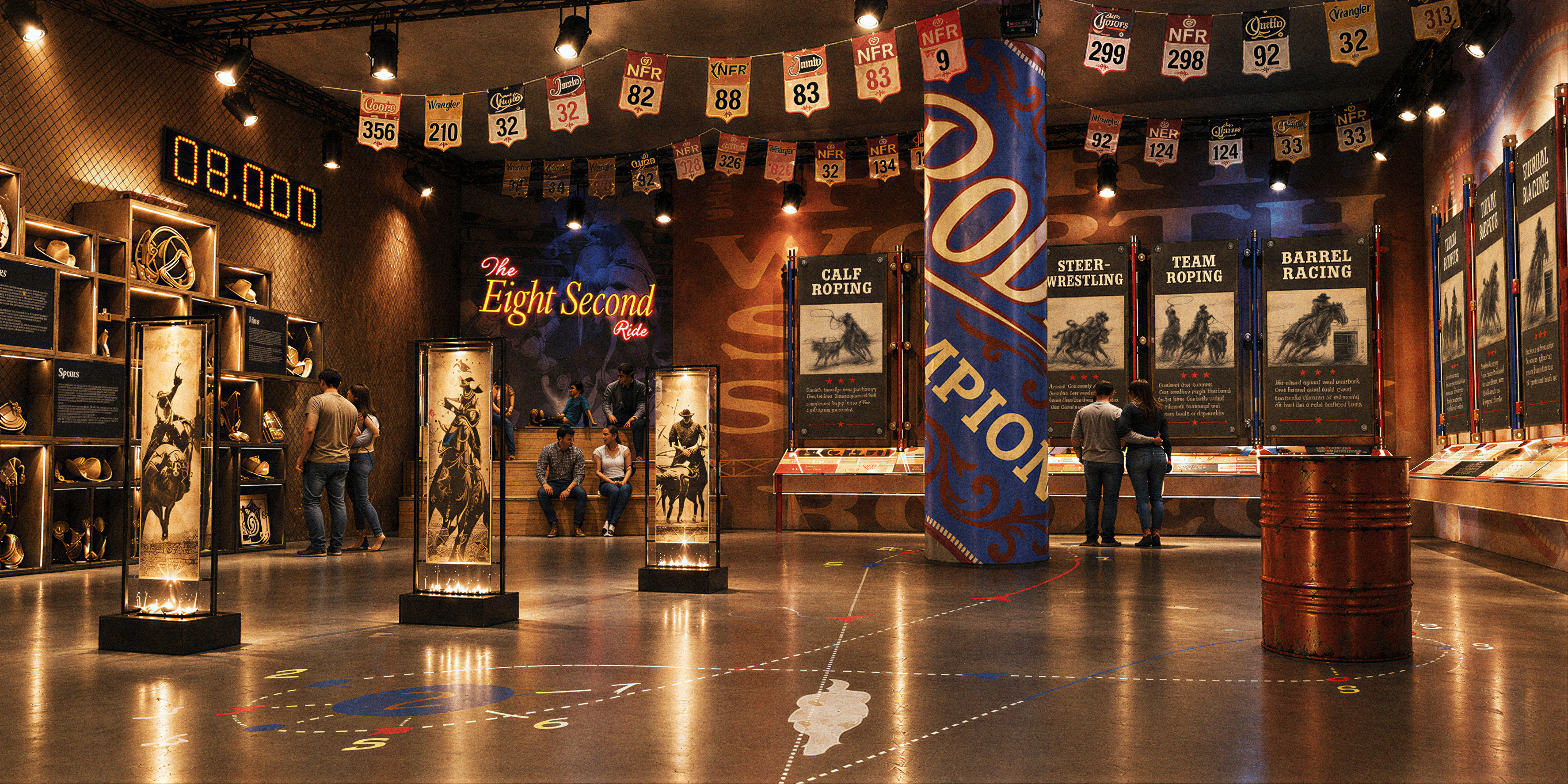
Texas Cowboy Hall of Fame, Fort Worth, TX
What do you wish more Texas design and architecture leaders understood about environmental graphic design?
Environmental graphic design is an integral part of the spatial experience, not a layer applied after the architecture is resolved. The strongest collaborations happen when we are involved early enough to help shape how people move through a place, what they understand, what they remember, and how the larger story is revealed over time.
Our role is often less about adding graphics to a surface and more about helping define the relationship between message, architecture, identity, and experience. That means asking fundamental questions about what a space is trying to communicate, where that communication should happen, and whether the architecture itself can carry part of that responsibility.
When environmental graphic design is integrated from the beginning, it has the ability to influence planning, circulation, scale, materiality, landmarks, and moments of arrival. That is where the work becomes most meaningful.
You’ve talked about wanting to be part of the conversation earlier in a project’s life. What does that look like?
I think environmental graphic design is too often treated as an accent, something applied after the “real” decisions are made. My dream is to be part of that conversation from day one, meaning before the gross square footage or floor plans are locked in. So often the space plan program is defined well before anyone has talked about the user experience. I’ve had to rework plans to accommodate tour paths that required three times the square footage initially allocated. Even the client didn’t realize what they needed for their space, which was a curated tour using their office as a marketing touchpoint to teach investors about what they do. I’d love more projects to start with understanding an organization, what they need for their business to succeed and their employees to thrive, then let the space respond. When we consider the story applied after the fact, we’ve missed an opportunity to create an experience over decoration.
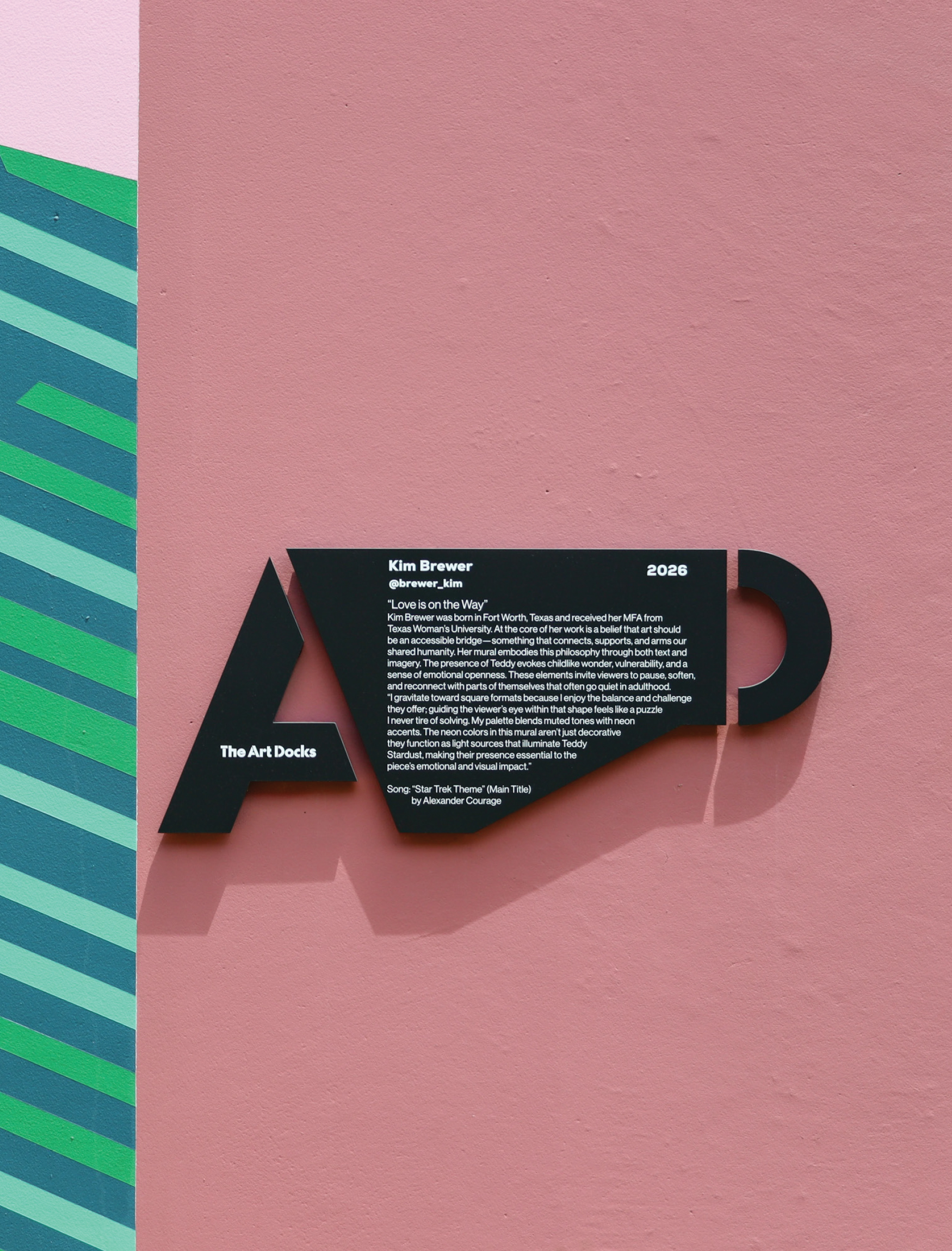
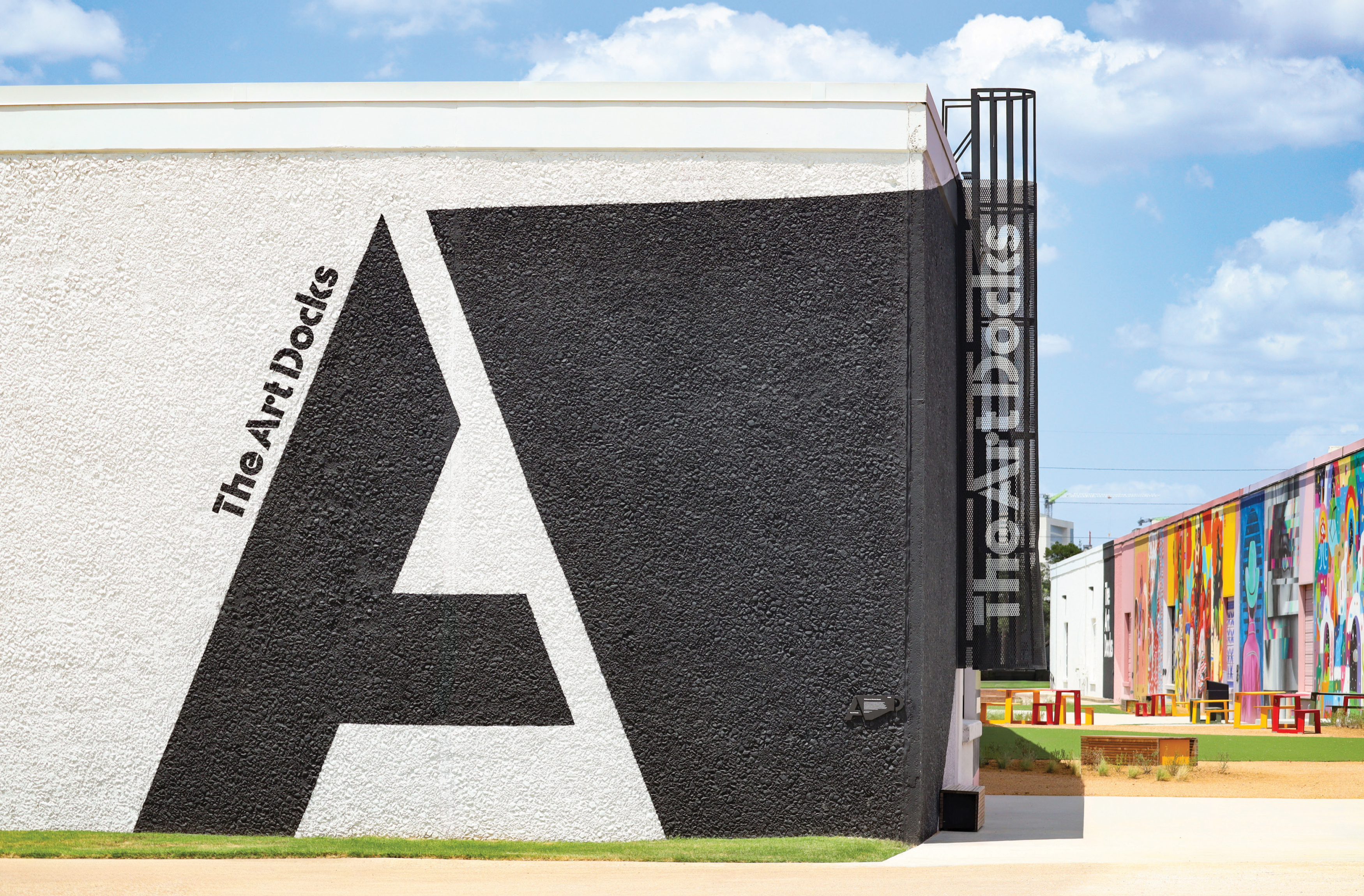
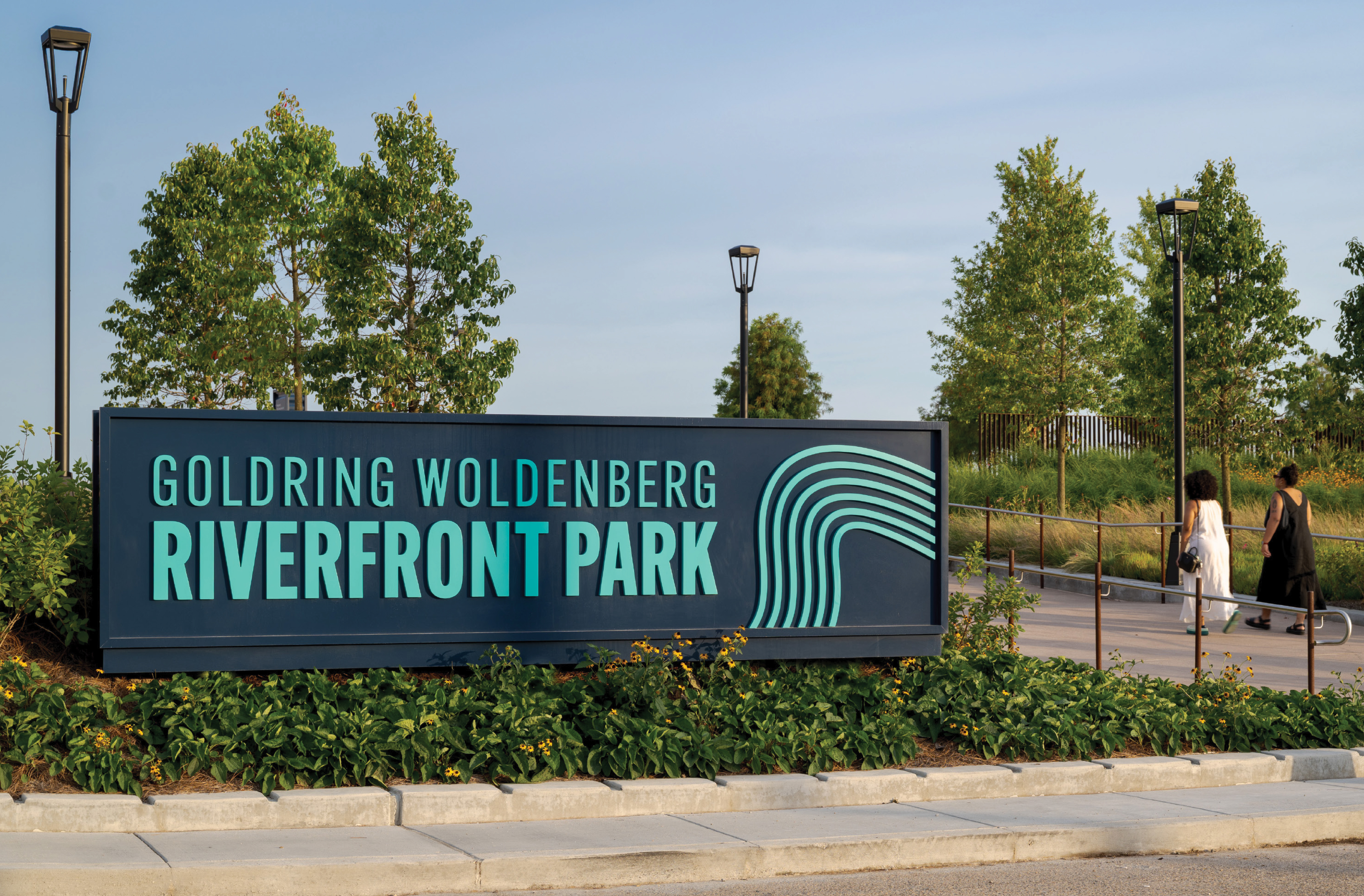
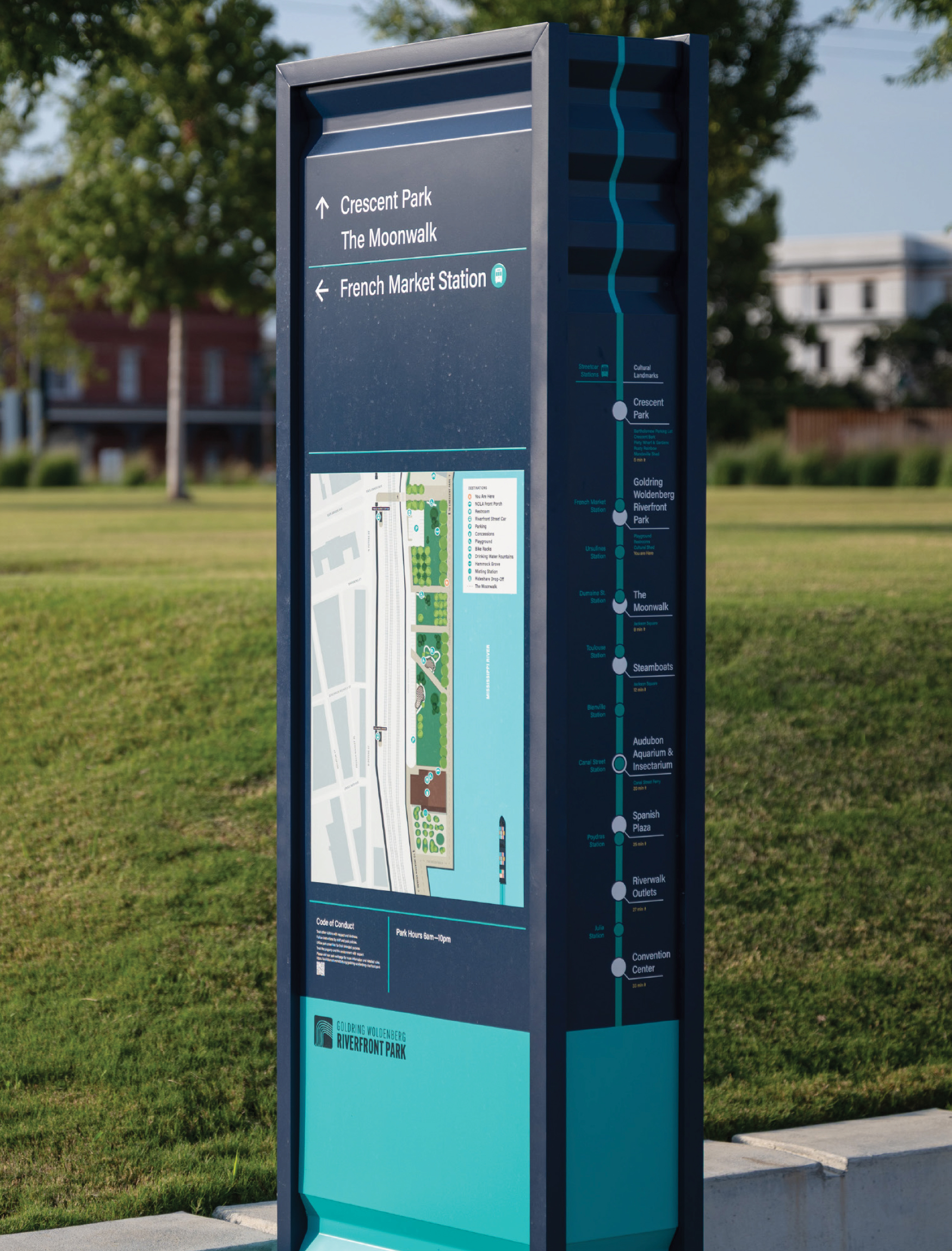
The Art Docks, Dallas, TX (top row), Goldring Woldenberg Riverfront Park, New Orleans, LA (bottom row)
You attend the TxA Design Expo each year. What do you hope to gain out of it, and what do you want people to take away from RSM Design being there?
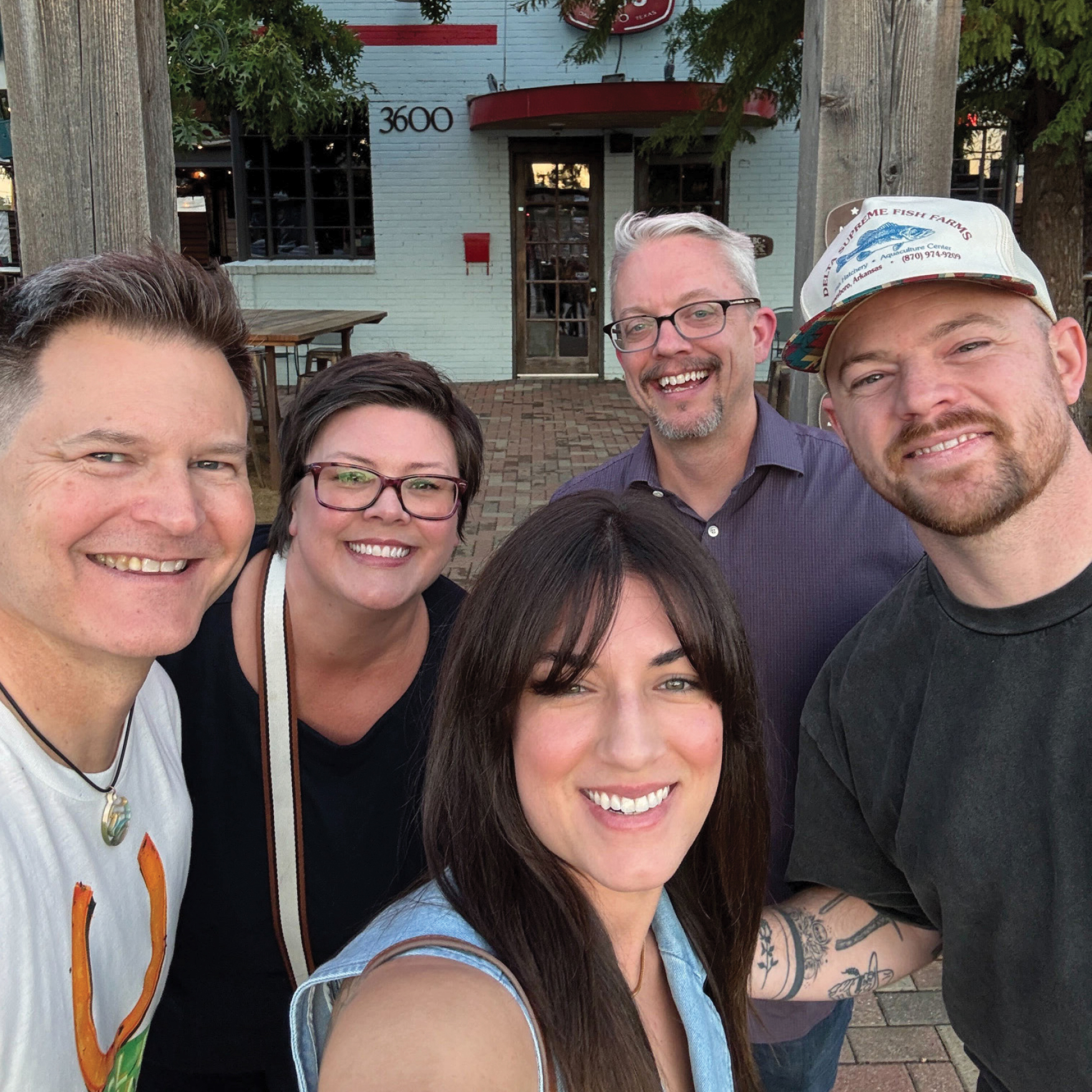
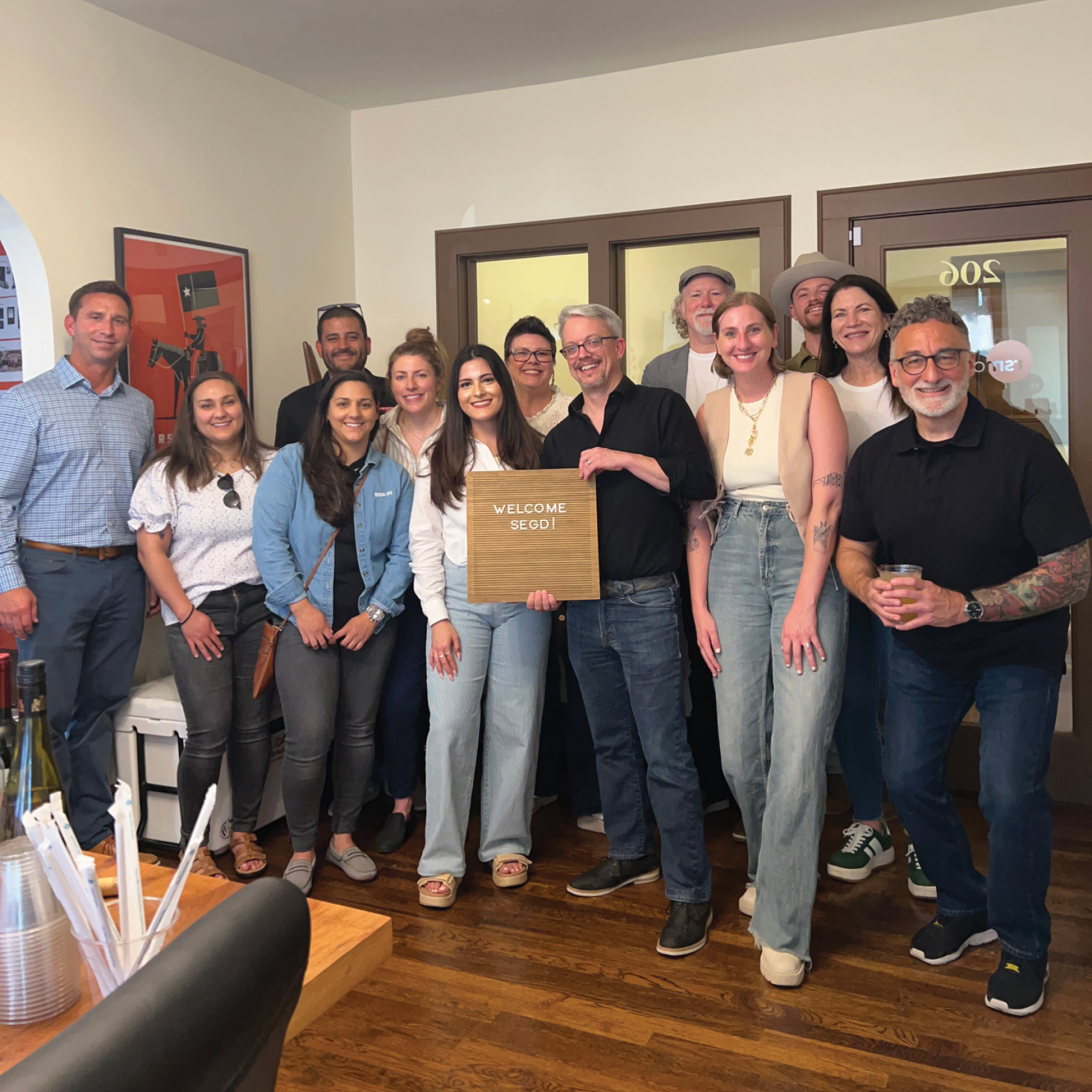
Each year of attending the TxA Design Expo has built on the last. The first time I attended was with Harry Mark, FAIA. He so graciously introduced me to many of his career long connections. The next year was about making new connections and reconnecting with existing ones. This year and those that follow, I hope to build on the previous year and continue to solidify my role as RSM Design’s Dallas Studio Director.
While we hope to build relationships, we attend the TxA Design Expo to learn and be inspired. One of my favorite things about the TxA Conference are the tours. Experiencing what other firms are designing firsthand and understanding their creative perspective holds just as much value. I am especially excited about the tour of the Pearl Brewery in San Antonio, which is one of our projects.
That being said, some of our best opportunities have started with someone remembering a conversation while meeting up for coffee at the conference and giving us a call months later. That kind of connection doesn’t happen from a distance.
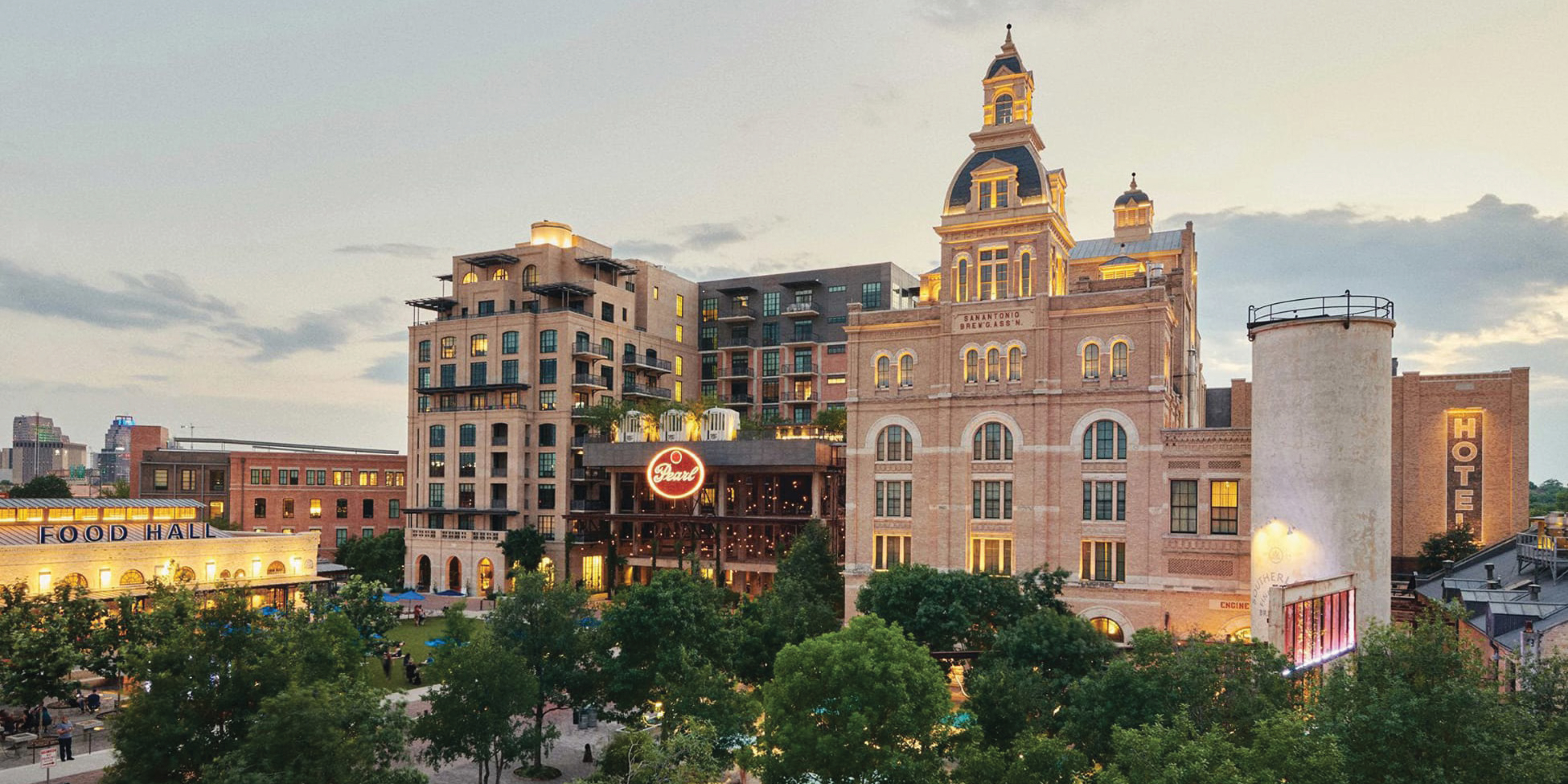
Pearl Brewery, San Antonio, TX
Twenty-seven years in, what do you hope people take away from the Dallas studio’s presence in Texas?
I want to help carry the partnerships that built RSM Design over the last 27 years into the next 27. A great foundation was laid, so my hope is to keep growing our legacy the same way it was built: through relationships, and in a way that still feels like RSM Design.
Read more about Paige ›