January 22, 2026
The Power of Branded Interiors: From Origins to Opportunity
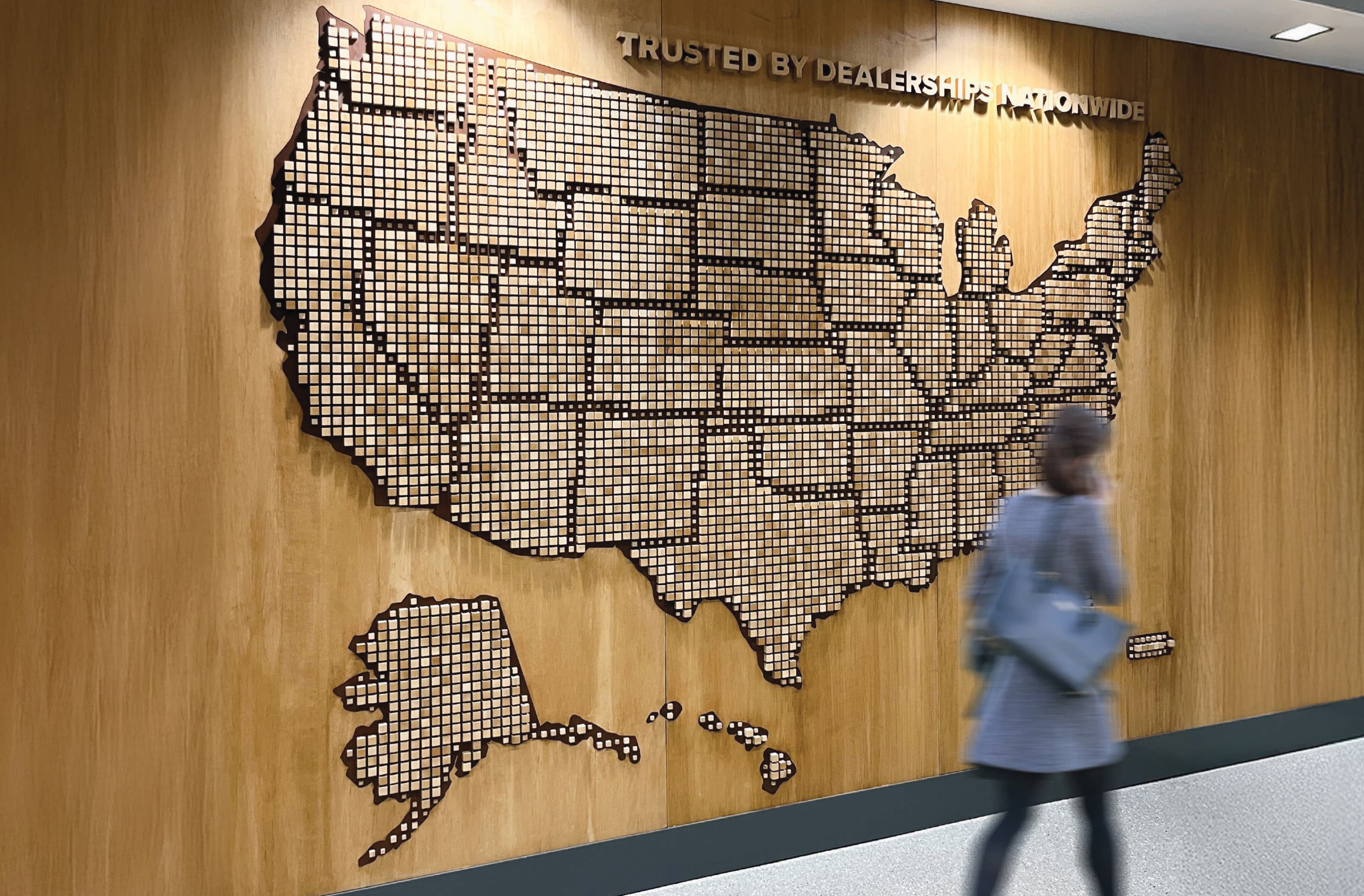
January 22, 2026
The physical spaces where we work, learn, and shop, play a significant role in our daily experiences. These places have the potential to facilitate connections and meaning in our lives, telling powerful stories about who we are and what we value.
Branded interiors have evolved far beyond the simple placement of logos on walls. They have become immersive, multidimensional expressions of brand identity that have the capacity to touch all our senses and create lasting impressions. A branded interior is the result of a brand moving in and making itself at home, crafting a space that feels like the brand in every corner.
When done well, a branded interior translates a company’s personality into textures, lighting, layout, and ambiance. They go beyond just function and aesthetics, working within the built environment to shape perception, strengthen identity and build emotional connections. Walk into a well branded interior, and you do not just see the brand, you experience it.
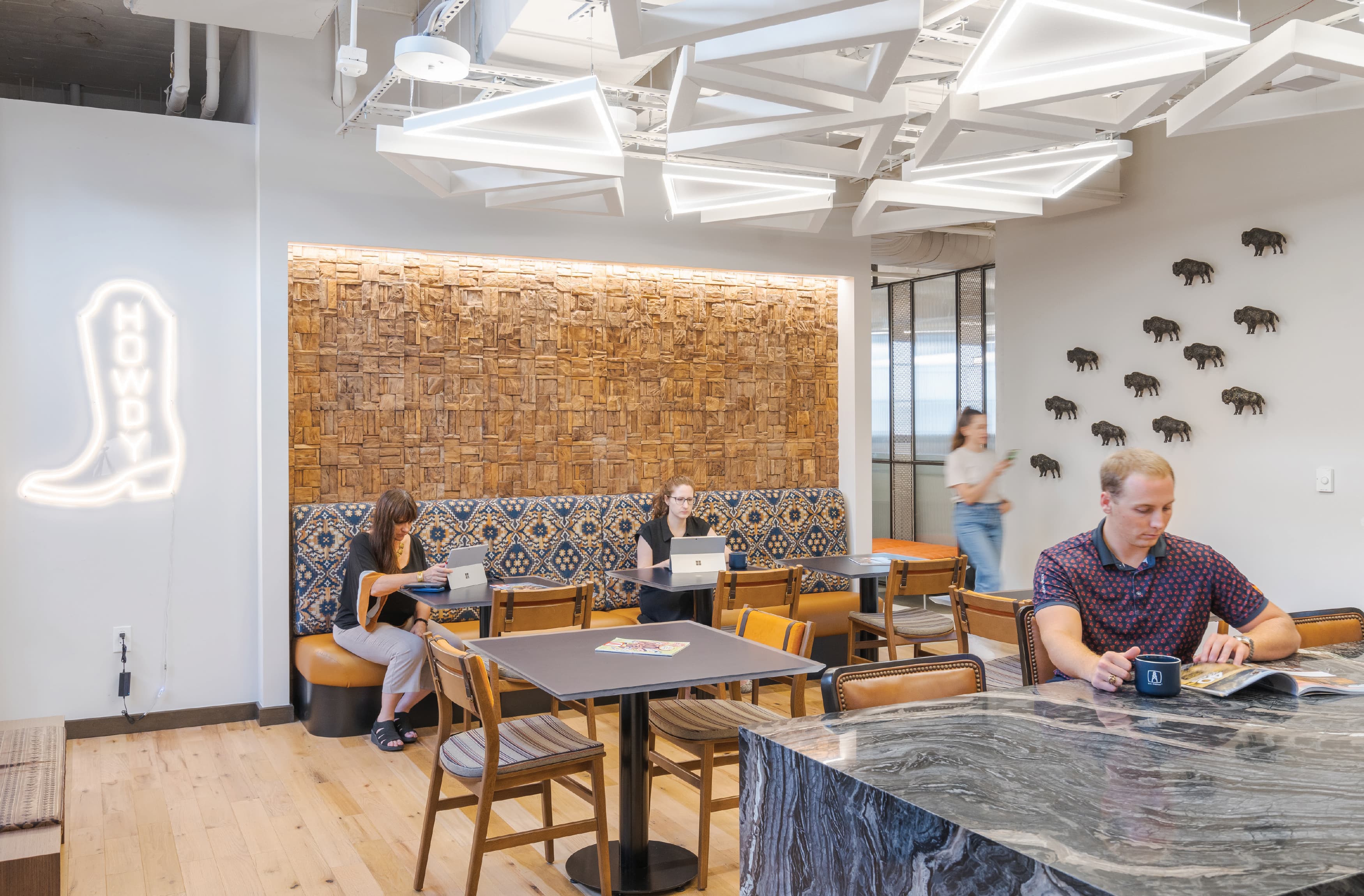
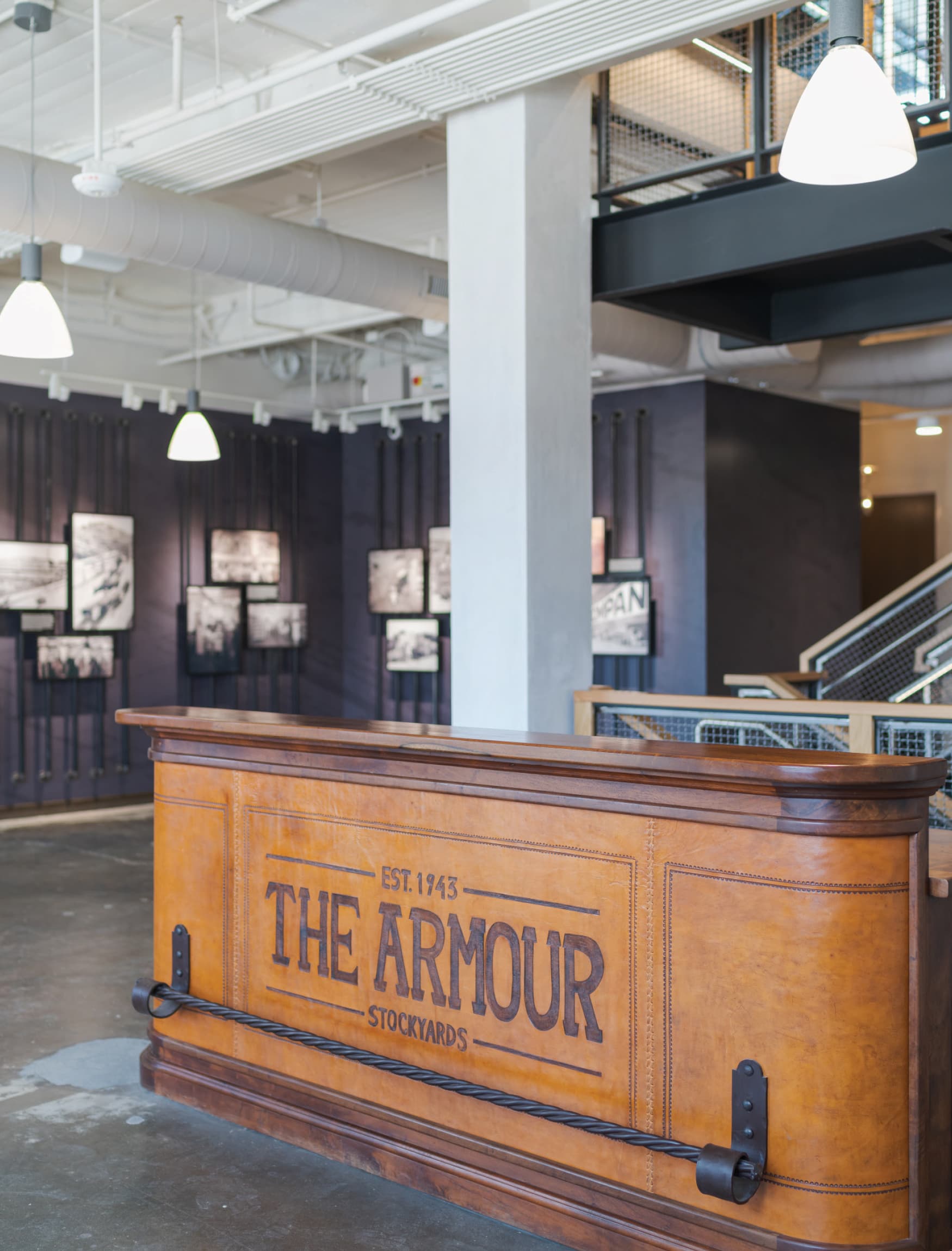
The Armour Building, Fort Worth, Texas
The concept of environmental branding is as old as humanity itself. People have been marking their spaces with identity indicators since prehistoric cave paintings. Those ancient artists were not simply decorating—they were claiming territory, telling stories, and creating shared experiences that bound communities together. The handprints on cave walls in Indonesia and Spain, some dating back over 40,000 years, served as declarations of presence and belonging. This impulse to mark our environment and enable it to better reflect our own identity has never left us.
Fast forward through history, and we can see this same principle evolving. Medieval guilds hung elaborate signs outside their workshops. Royal families adorned their palaces with heraldic symbols. Religious institutions created awe-inspiring spaces that communicated values through architecture, light, and decoration. These were not just functional spaces—they were carefully crafted environments designed to evoke specific emotions and reinforce group identity.
Each era’s approach to marking space reflected its values and social structures, creating physical indicators of collective identity that helped define communities, spread information, and establish clear hierarchies. The evolution from individual handprints to complex architectural symbolism demonstrates humanity’s growing sophistication in using the built environment as a communication tool.
Ultimately these early iterations of signs, symbols, and branded designs have inspired and grown with us since the beginning of civilization; their power lies in their ability to wordlessly inform people of what to expect, how to behave, and how to align with their surroundings in ever-changing contexts. Though thousands of years have passed, the same is true for branded interiors today: they work to inform us, connect us, and to foster a sense of belonging wherever we go.


Romanesque fresco, Sant Climent Church, Taüll, Catalonia, Spain (left) and Goa Gajah (Elephant Cave), Bali, Indonesia (right)

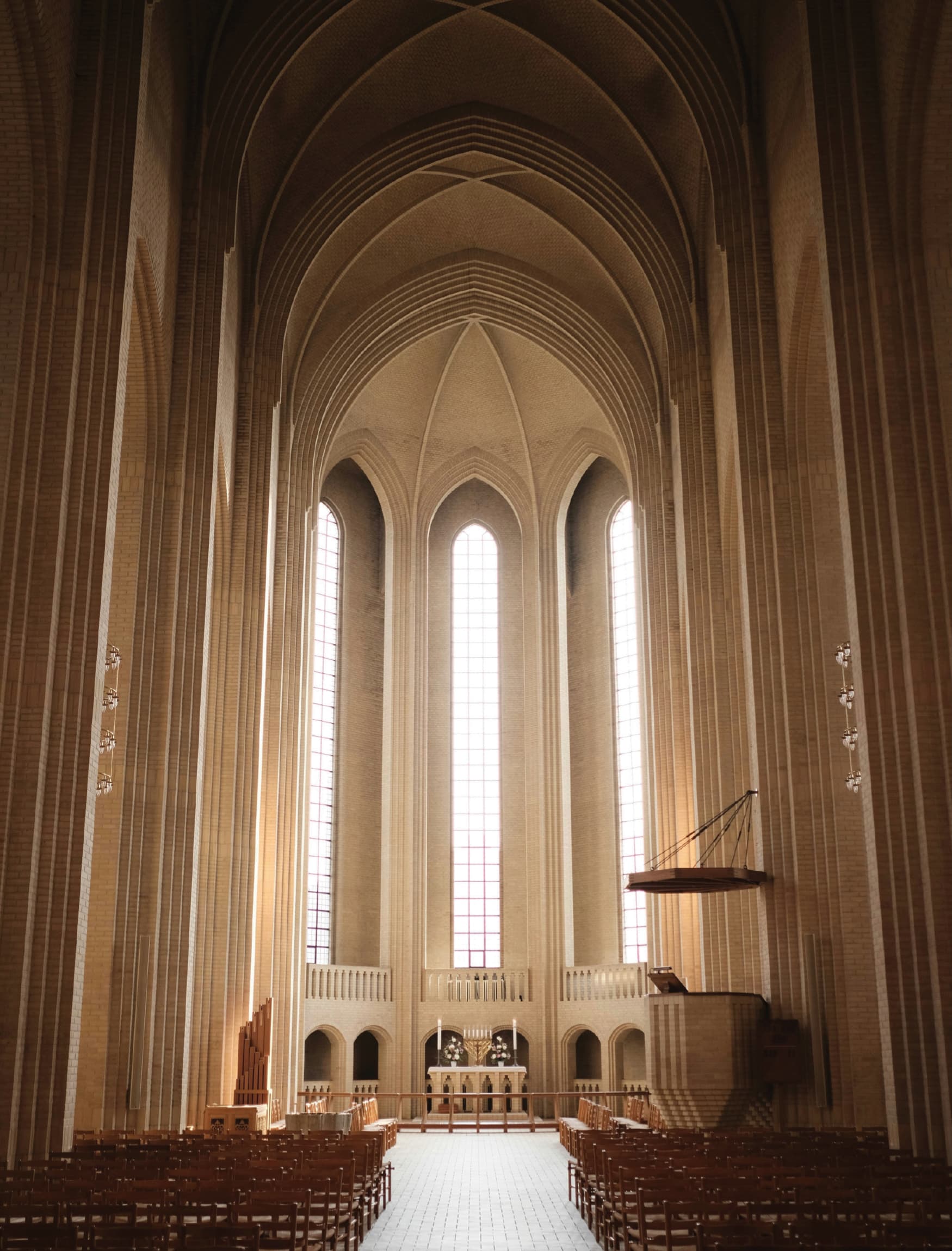
Royal Coat of Arms of the United Kingdom, Buckingham Palace, London (left) and Grundtvig’s Church, Copenhagen, Denmark (right)
The modern concept of branded interiors truly took shape in the twentieth century, as businesses began to understand the psychology of space. Early retail pioneers like department store magnates recognized that the shopping environment itself could influence behavior and perception. But for decades, the approach remained largely decorative—a logo here, corporate colors there—basic design decisions that functioned by-and-large on a purely visual or aesthetic level.
What has fundamentally changed over time is our understanding of how environments affect people psychologically, emotionally, and behaviorally, beyond just their appearance. Today’s branded interiors have transformed from a purely decorative approach to a strategic investment meant to shape our emotional, embodied experiences.
There is something deeply familiar about walking into a well-branded space. For many of us, it echoes a feeling we first experienced in childhood: school spirit. Remember the pride of wearing your school colors, the excitement of pep rallies, the sense of belonging that came from being part of something larger than yourself? Companies have recognized this powerful psychological phenomenon and are deliberately cultivating it in their branded spaces.
Organizations today recognize that the interior of the built environment offers unique opportunities to build authentic connections with employees, customers, and visitors. The corporate lobby is not just a transitional space—it is a declaration of values. The cafeteria is not simply where people eat—it is where culture is reinforced and relationships are built. The storefront is not just a place to purchase the essentials—it is a chance to define and redefine one’s perception.
This shift reflects a fundamental human need for connection; we are communal creatures who crave belonging and shared identity by nature. When organizations create branded interiors that foster genuine pride, they are tapping into the same sense of community that made us feel part of something special as children. The difference is that now, as adults, we are empowered to choose those communities for ourselves—as employees, as customers, and as community members. The physical environment plays a crucial role in determining where we feel we belong.
In our current culture where remote work and digital interactions have become commonplace, thoughtfully designed physical places take on new importance. A branded interior takes users beyond their screens in multisensory, three-dimensional experiences that create a strong sense of place, identity, and community for us to enjoy in one another’s company.
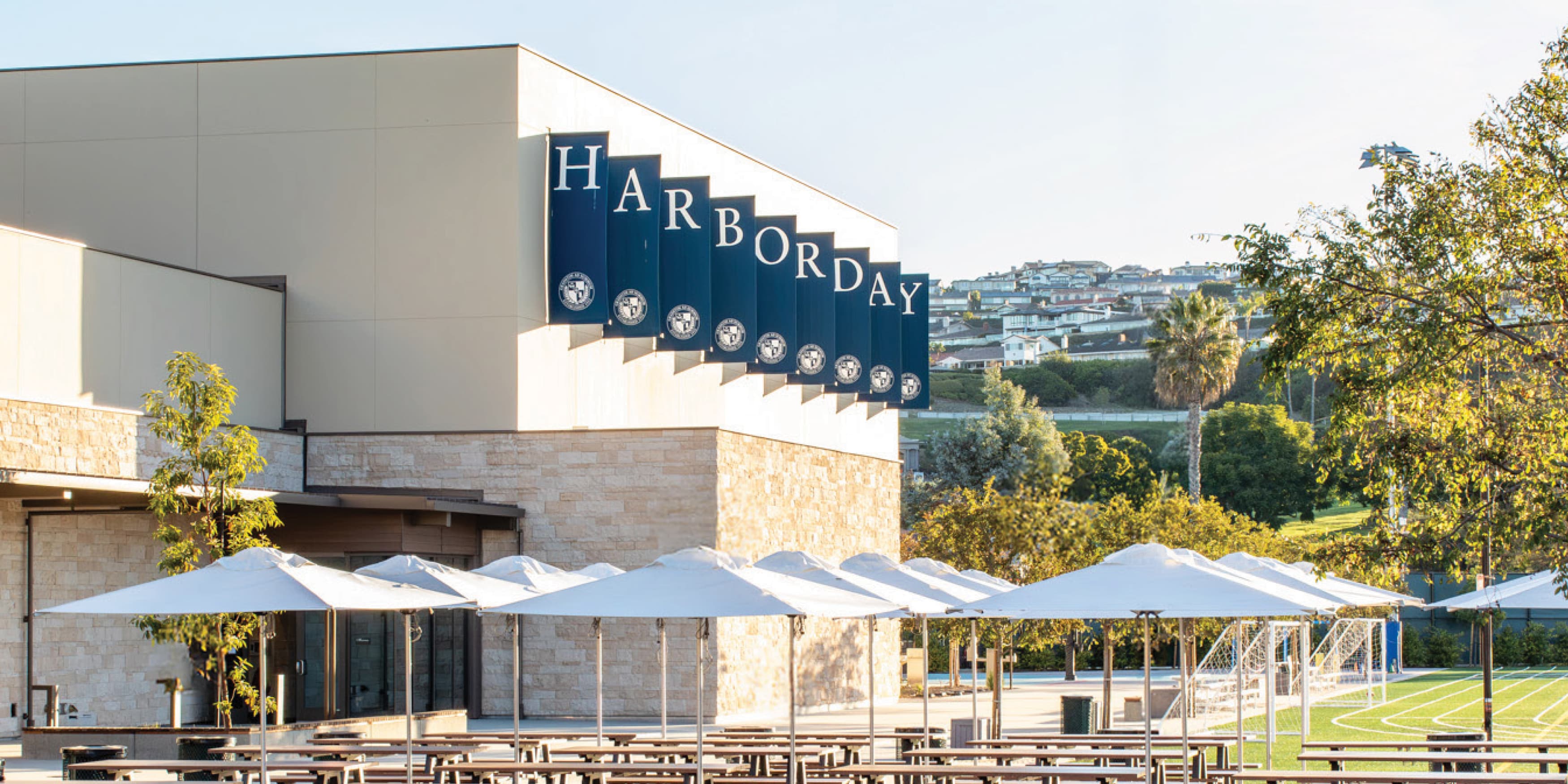

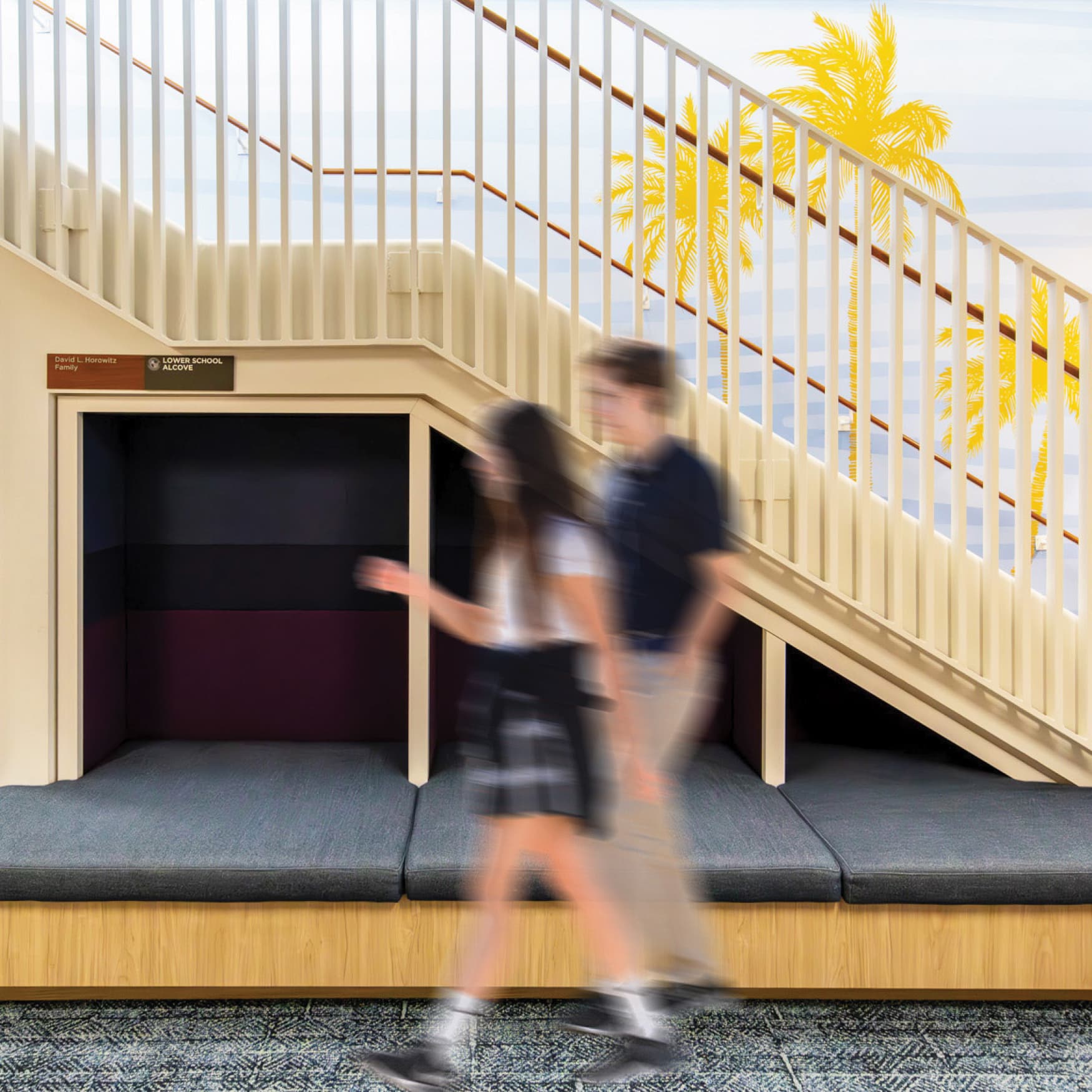

Harbor Day School, Corona Del Mar, California
The branded interiors of tomorrow face a unique challenge: convincing people to leave the comfort of home. The pandemic fundamentally shifted our relationship with the environments that lie beyond our own doorsteps: we discovered we could work in sweatpants at our kitchen tables, shop with a few clicks, and stream entertainment on demand. We eliminated commutes, gained flexibility, and created personalized environments tailored to our exact preferences.
Retail spaces, cultural institutions, and community gathering places all face the same question: why should people venture out? The answer lies in creating branded interiors that offer experiences genuinely more rewarding than staying home—spaces that provide something screens cannot replicate.
But what if we approached this challenge by starting with experience rather than square footage? What should an employee feel when they arrive at work each day? What should a potential client experience during that first visit? Are these moments so fundamentally different that they require separate spatial narratives? Throughout the workday, what choices do employees have in the office that they simply cannot access at home—the ability to shift between modes, postures, and environments that a single home workspace cannot provide?
For retail, what can consumers not get online? Touch, smell, scale, the weight of materials in hand. Are retail environments evolving into curated display centers where customers engage their senses—touching, feeling, sampling—before completing purchases digitally? Imagine how this shift transforms spatial requirements, lighting design, and information architecture.
The future of branded interiors lies in creating spaces that are genuinely more comfortable, accessible, and enjoyable than staying home. This means rethinking everything from acoustics and lighting to furniture and spatial layouts. It means creating zones for different work modes and incorporating biophilic design elements. It means understanding that comfort is rarely “one-size-fits-all” and designing flexible systems that accommodate different needs.
For designers and architects, this defines the journey ahead—not just solving spatial puzzles, but choreographing human experience. Creating spaces where people can learn from one another, celebrate collective achievements, and discover genuine purpose in coming together once more.
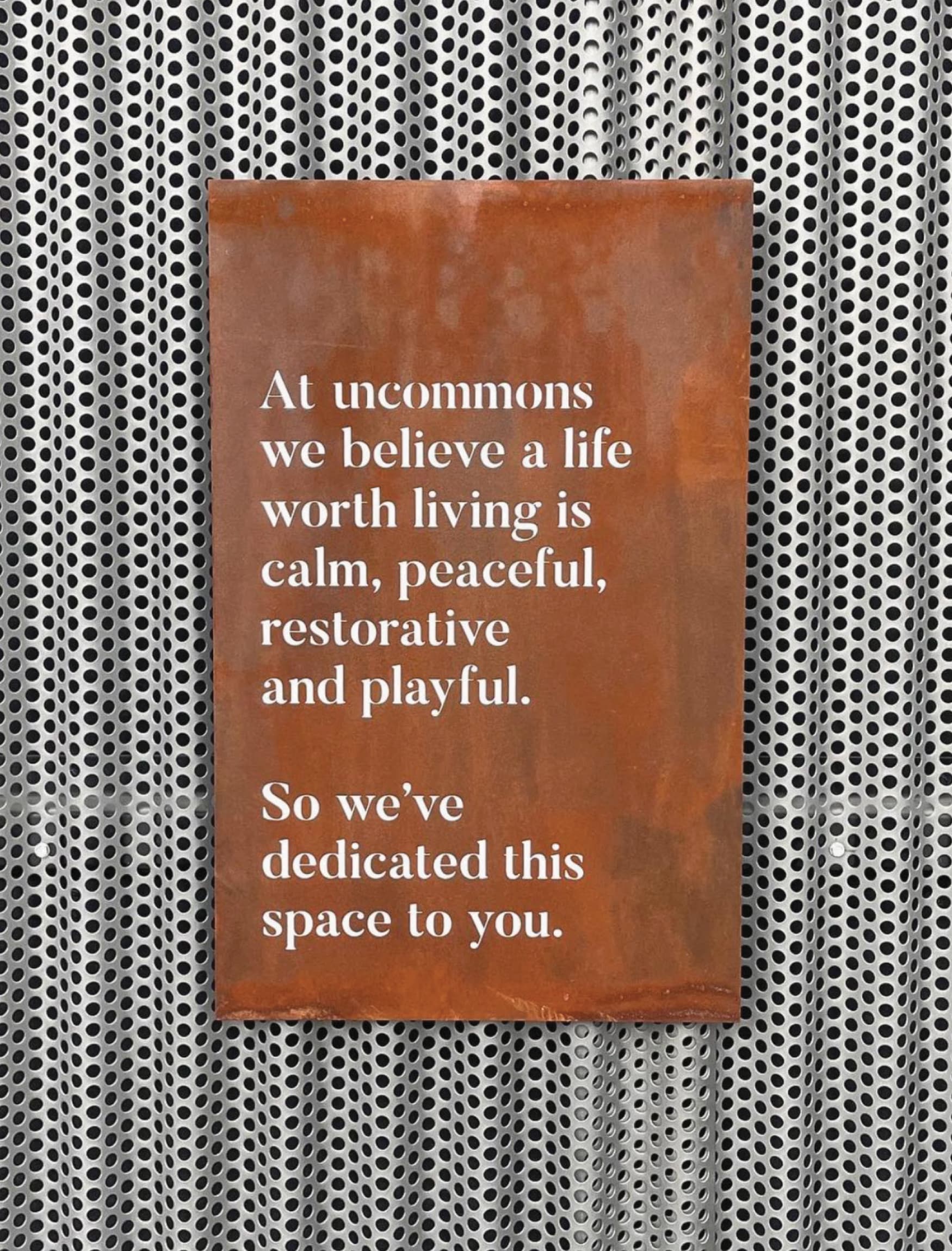
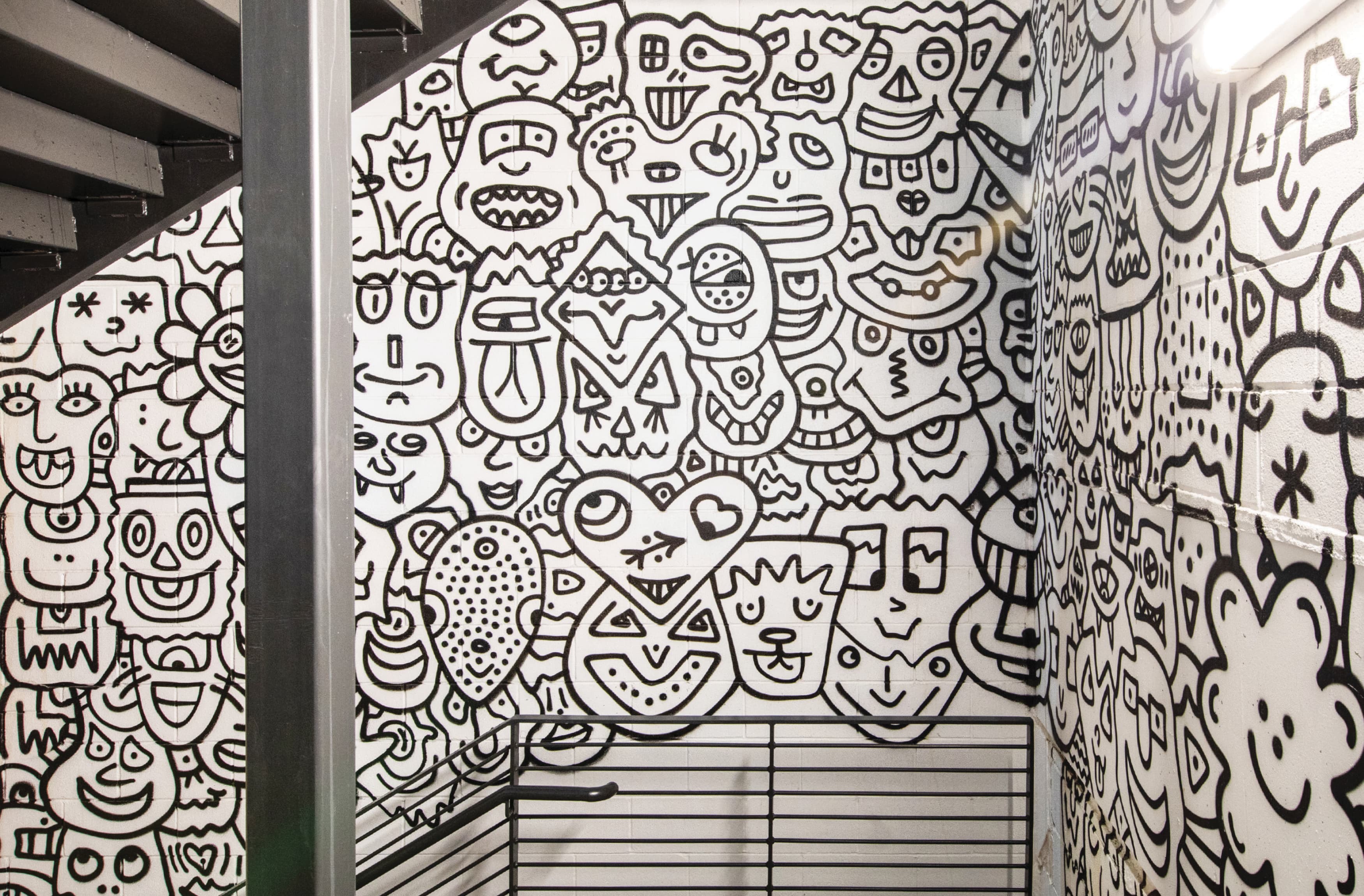
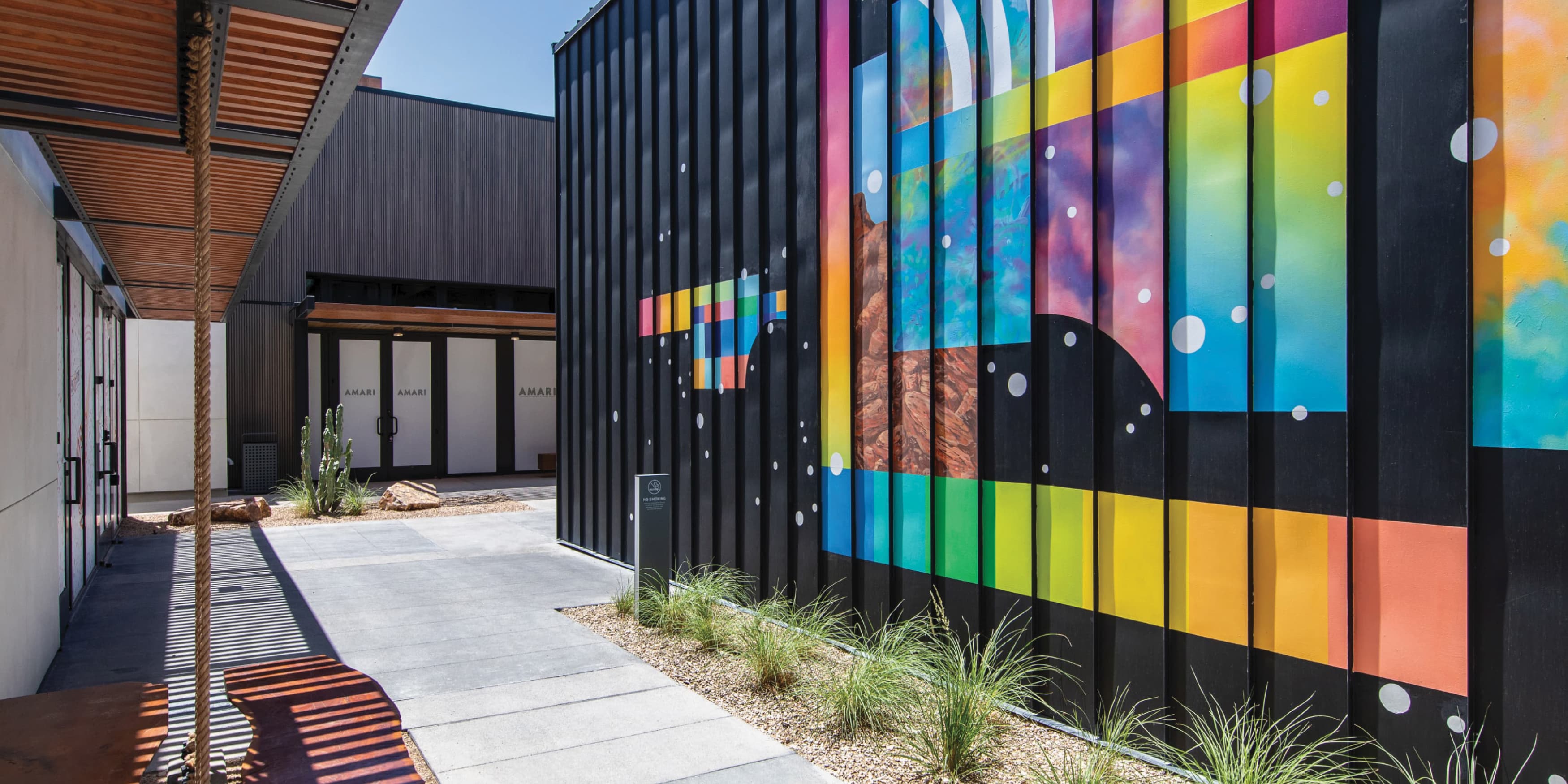

UnCommons, Las Vegas, Nevada
Tomorrow’s branded interiors will be adaptive and responsive, using technology not for pure utility but for enjoyment and personalization. They will prioritize mental health and wellbeing as core design principles rather than afterthoughts. They will blur the lines between hospitality and workplace design, treating employees with the same care that luxury hotels extend to guests.
Most importantly, the branded interiors of tomorrow will recognize that bringing people together must serve a genuine purpose. These environments must offer something irreplaceable: the energy of human connection, the spark of spontaneous discovery, the sensory richness of physical experience, the sense of being part of something meaningful. When space facilitates these experiences while providing comfort and flexibility, it becomes invaluable.
The thread connecting prehistoric cave painters to today’s designers is the fundamental human need to create environments that express identity and tell stories. As we move forward, the most successful branded interiors will be those that honor both our ancient instincts and our evolving expectations, creating spaces that feel less like obligations and more like destinations worth the journey, places that remind us why gathering together, in person, still matters and always will.
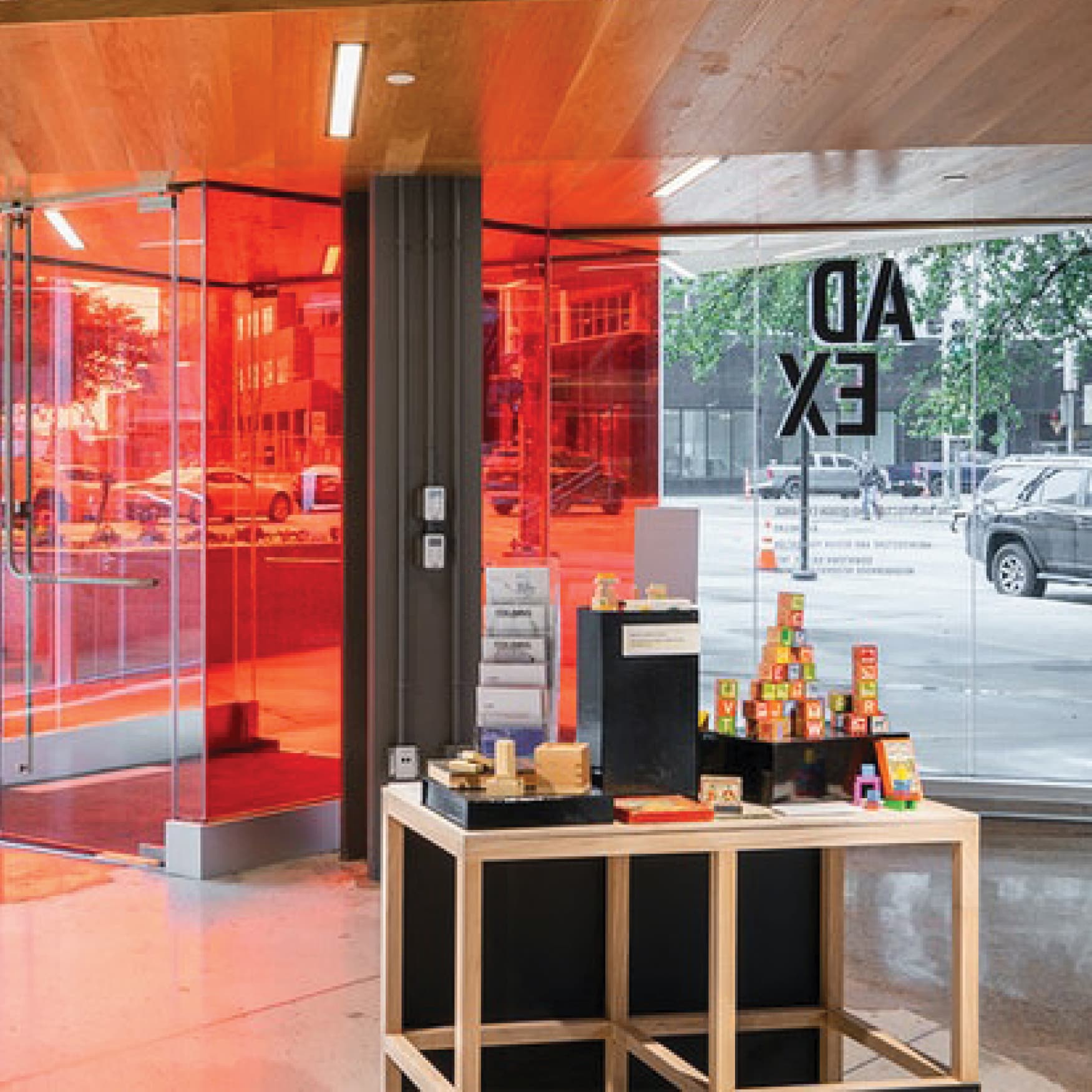
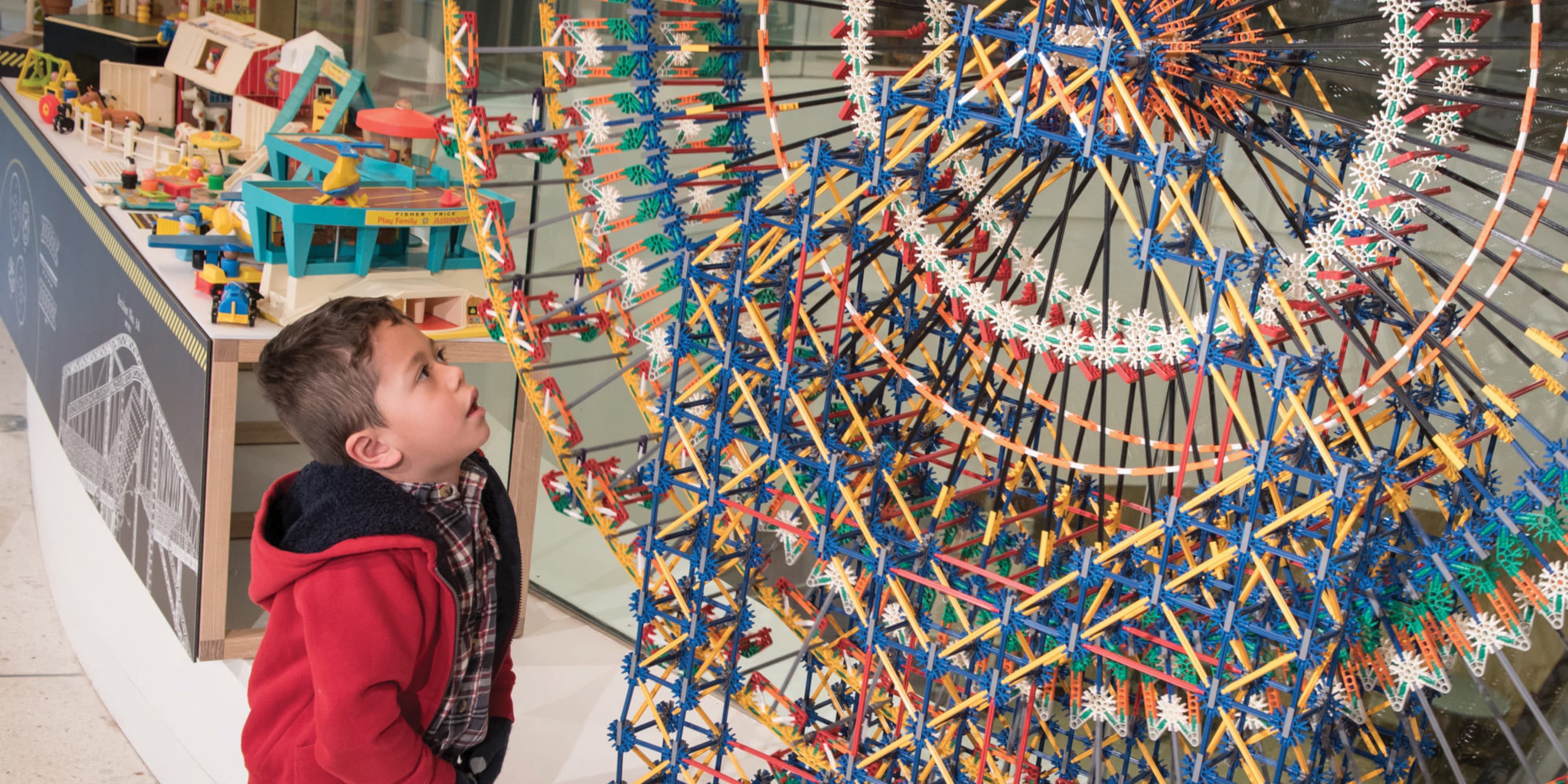
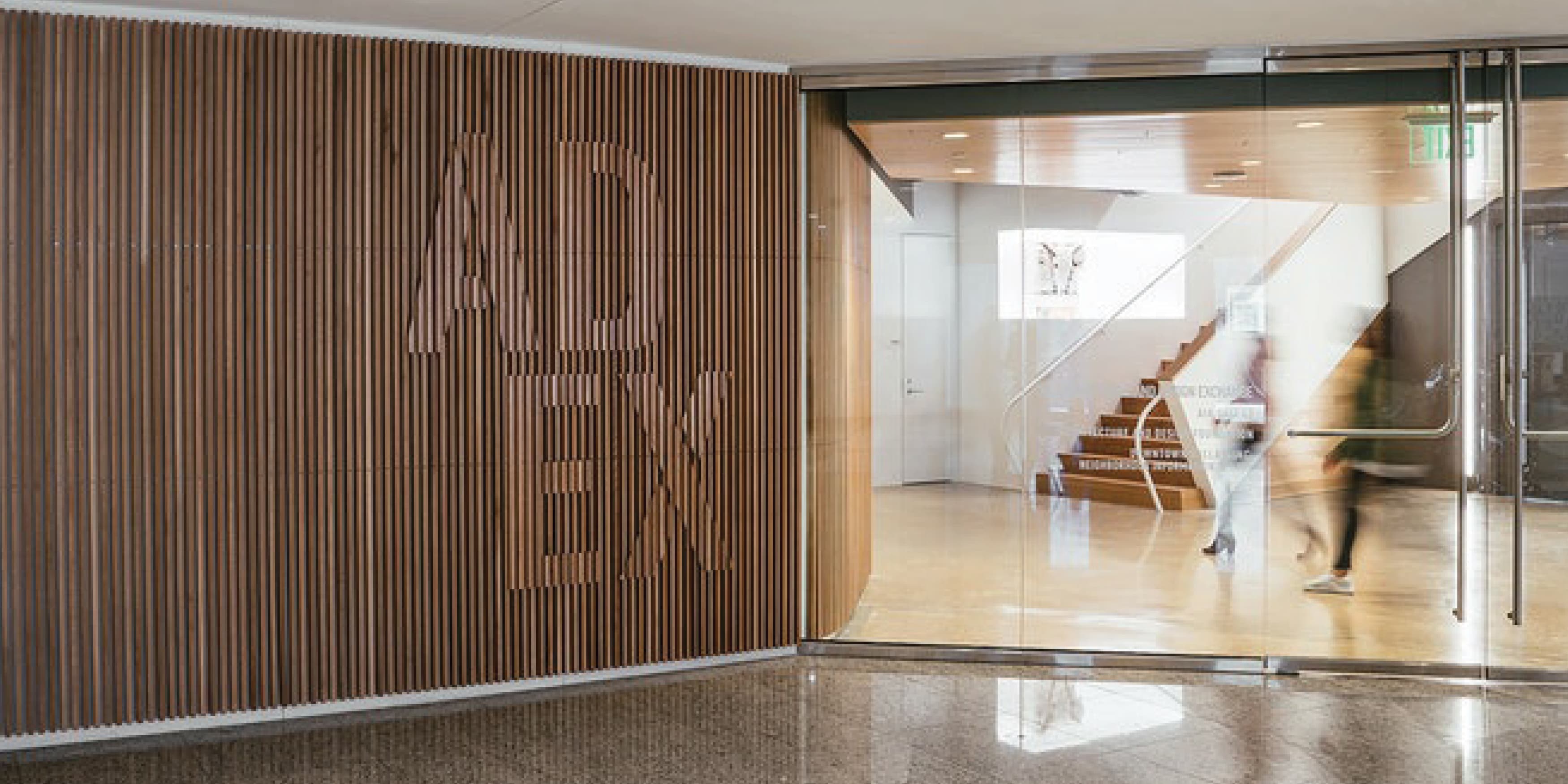
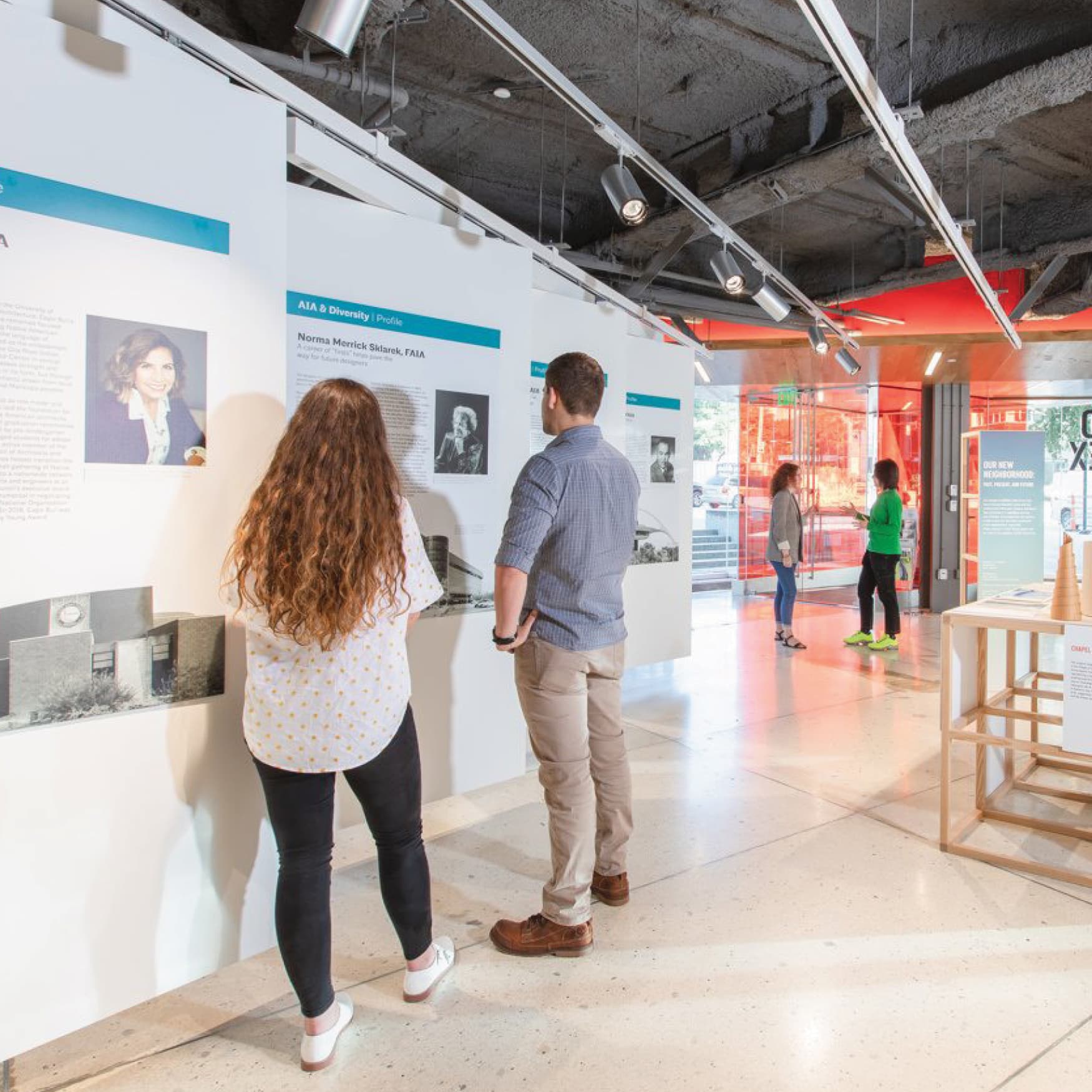
AD EX, Dallas, Texas
Nutt, David. “Hand and Footprint Art Dates to Mid‑Ice Age.” Cornell Chronicle, 14 Sept. 2021, news.cornell.edu/stories/2021/09/hand-and-footprint-art-dates-mid-ice-age.
Tsang, Roxanne, et al. “Hand Stencils and Communal History: A Case Study from Auwim, East Sepik, Papua New Guinea.” Archaeology in Oceania, vol. 58, no. 1, April 2023, pp. 115‑130. Wiley, doi:10.1002/arco.5287.
Richardson, Gary. “Craft Guilds and Christianity in Late-Medieval England: A Rational-Choice Analysis.” Rationality and Society, vol. 17, no. 2, 2005.