Designing for Dignity: Part 1
Posted October 07, 2026 · Education
By Cody Clark, Principal & Los Angeles Studio Director
A Principle Centered Design Approach to Human Healthcare Experiences
When Design Becomes A Promise
Every built environment speaks to the people inside. In a healthcare environment, that message carries a heavier weight because the people inside are often frightened, uncertain, and at their most vulnerable. Designing for dignity is a fundamental commitment to treating patients and their families as whole people, not as conditions to be managed or problems to be solved. When design honors this commitment, it becomes one of the most powerful tools a care organization can utilize. When it fails, the consequences are felt not in abstract metrics but in the lived experiences of people on even the most challenging of days.
Principle Centered Design offers a way to make this commitment concrete. Rather than leaving the definition of dignity open to interpretation, competing opinions, budget pressures, or deadline fatigue, a Principle Centered Design process anchors each decision to a shared understanding of what efficacy truly looks like. It builds trust before a single wall is planned, aligns teams before disagreements set in, and creates environments, tools, and interactions that consistently deliver on the promise the organization has made to the people it serves. This article series traces the process from beginning to end, across four essential phases: building trust through curiosity, leading with principles, fostering synergistic collaboration, and transforming principles into measurable action. This is how design can deliver on the promise of designing for dignity.
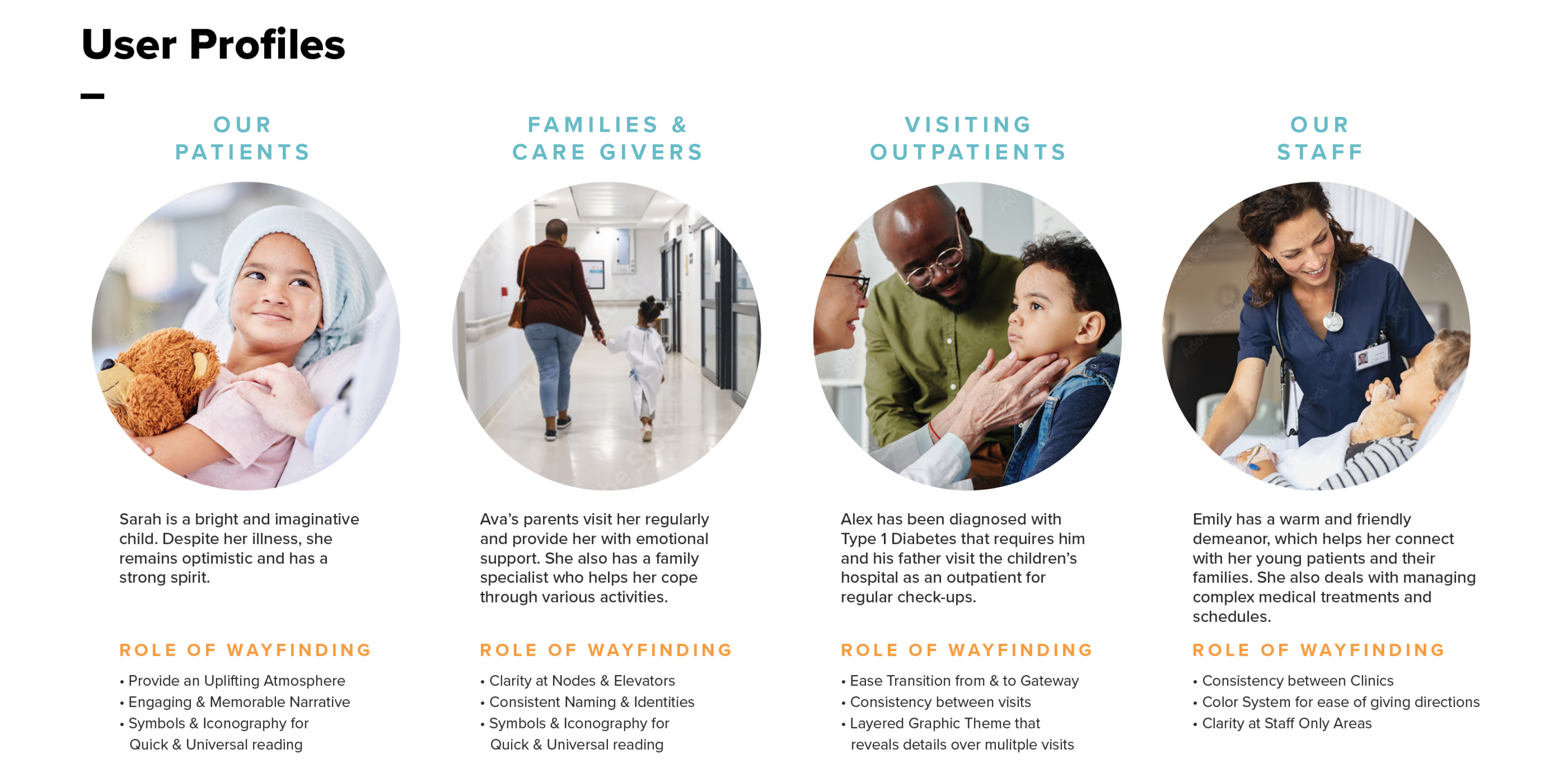
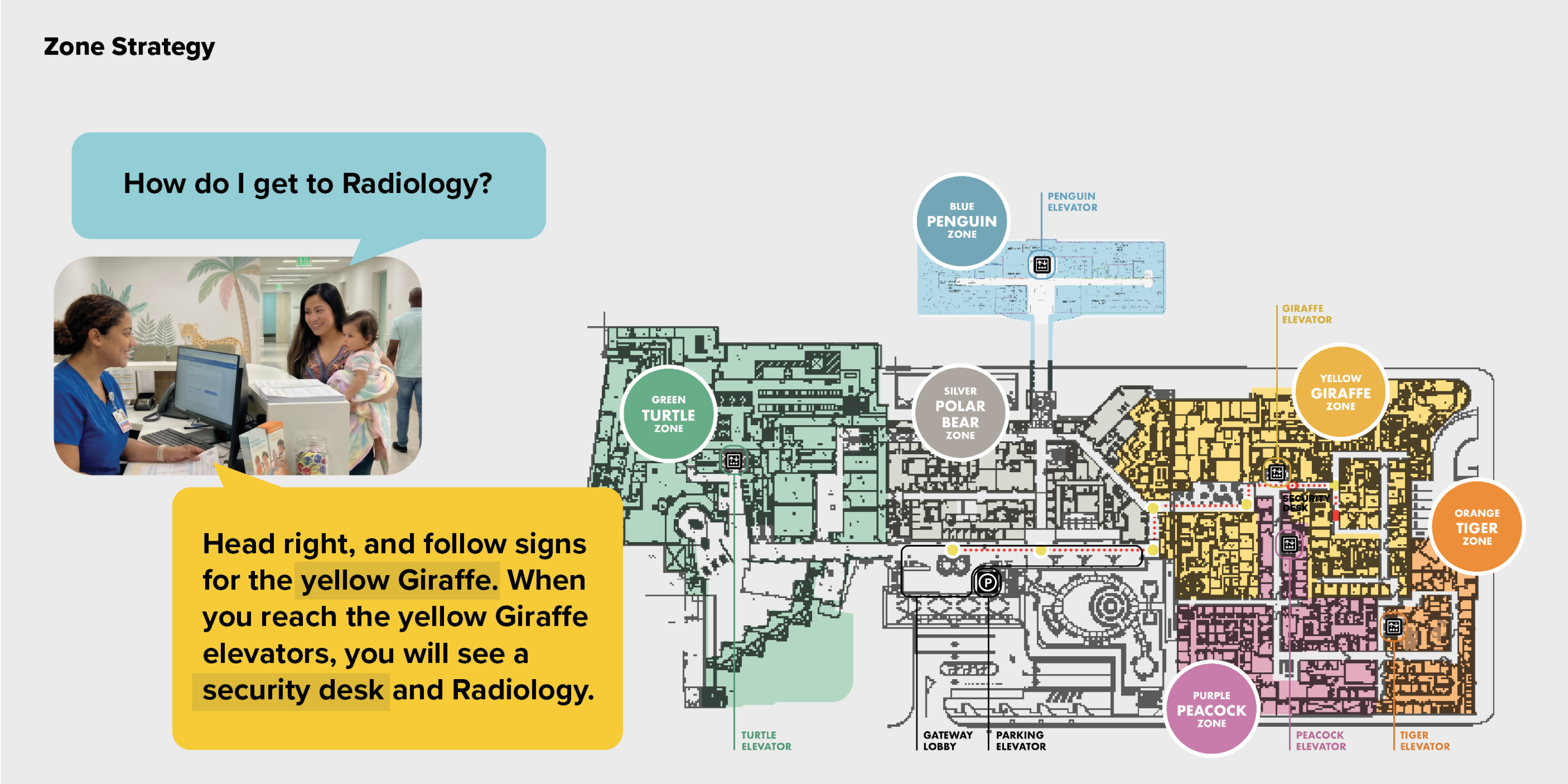
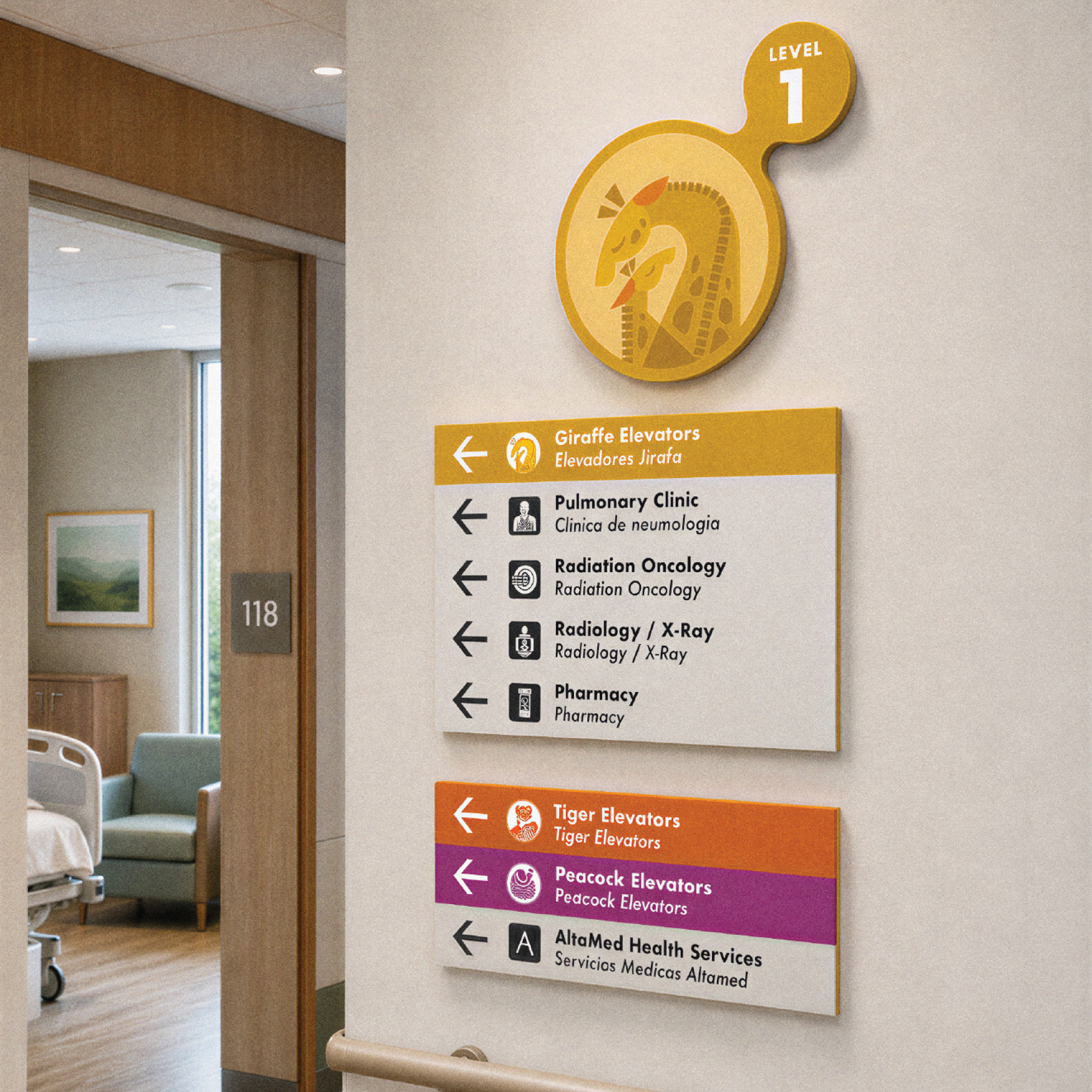
Children’s Hospital Concept Design
Building Trust Through Curiosity
The Question Before The Question
Many design projects begin too late. By the time a design brief is written, a scope is set, or a team is assembled, dozens of assumptions have already been made about what the client wants, what the patients need, what the building can do, and what success should look like. These assumptions harden quickly, and once they do, they become extraordinarily costly to challenge. RSM Design’s Principle Centered Design approach begins before any of this. It begins with curiosity.
During the design process, curiosity is not a personality trait; it is a discipline. It resists the urge to rush to premature solutions but instead remains genuinely open to what a design challenge needs. For RSM Design, this means approaching every conversation as an opportunity to discover and learn to produce meaningful, impactful environments. We also ask thoughtful questions that go beneath the surface of stated preferences to uncover the true priorities, true constraints, and true human stakes that the project is responsible for.
The Art of Purposeful Question
Purposeful questions are not the same as comprehensive questions. A long intake form covers a lot of ground without necessarily illuminating anything. A purposeful question is more specific and opens a conversation that would not have happened otherwise. It reveals a tension that needs naming or invites a perspective that was quietly excluded. “What does success look like for you?” is a good start. “What would it mean for this project to fail?” is often more revealing. “Who in this building has the least power, and how will this design serve them?” is the kind of question that reorients an entire process.
The goal of purposeful questioning is to build shared understanding. There is a meaningful difference between a client who has answered your questions and a client who feels genuinely heard. The first produces data, and the second produces trust. In complex, high-stakes design projects, trust is the foundation on which everything else is built.
Children’s Hospital Concept Design
Aligning Three Voices: Client, Consultant, & Operations
Healthcare design involves at least three distinct communities of interest, each with legitimate but often misaligned priorities. The client, whether a health system, a community hospital, or an ambulatory care provider, holds the organizational vision and bears the financial responsibility. The consultant team of designers, architects, and strategists brings expertise, process, and external perspective. Operational stakeholders such as nurses, administrators, environmental services teams, and department staff work in the building every day and understand the most where design will succeed or fail in practice.
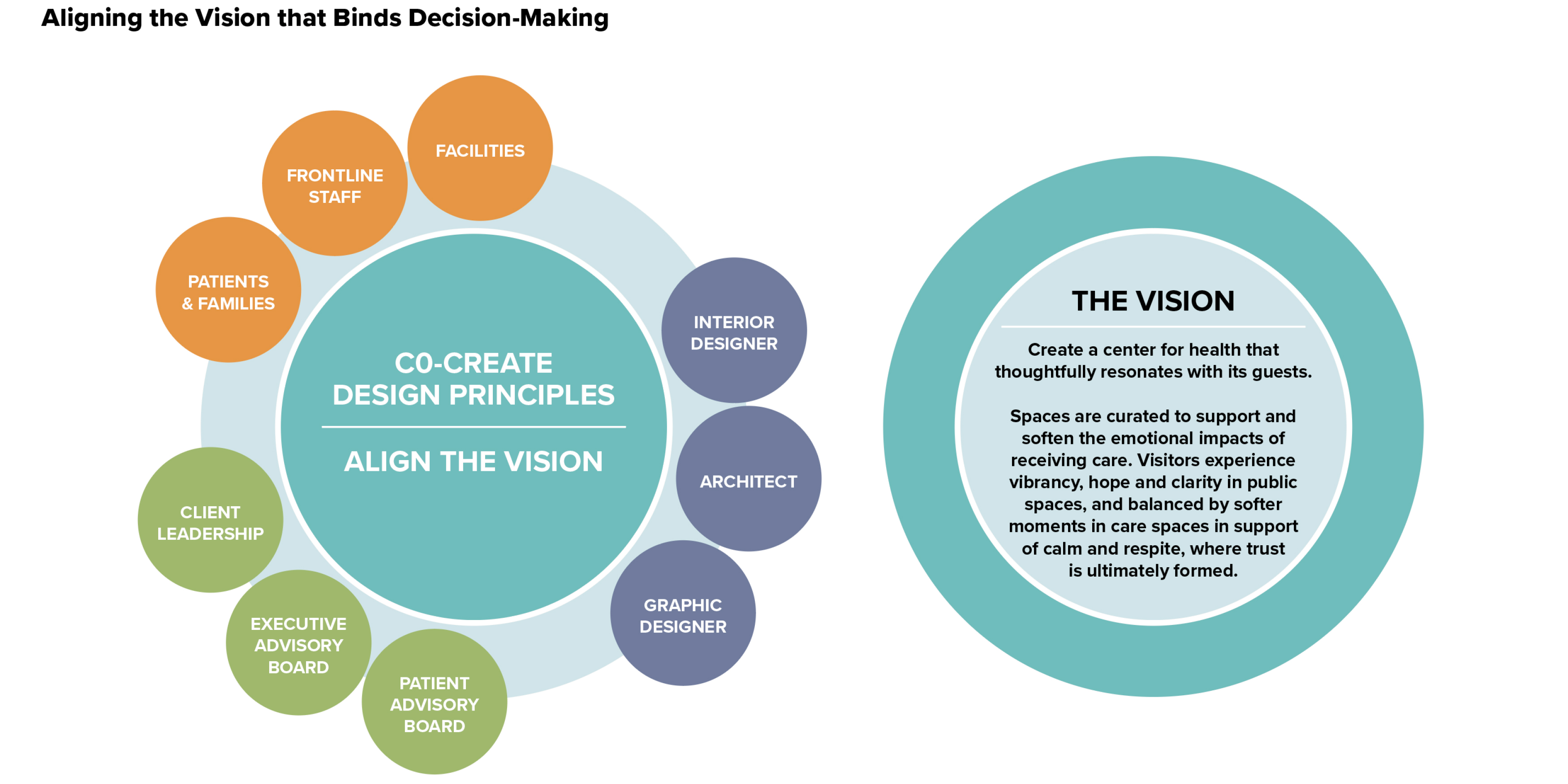
These three voices do not naturally align. Clients may lead with aspiration; operators may lead with constraint; consultants may lead with possibility. When those orientations collide without a shared framework, projects stall, revisions multiply, and the people who were supposed to benefit from the design, such as patients and families, get lost in the institutional noise. RSM Design’s Principle Centered Design approach treats alignment not as a nice-to-have but as a structural requirement. When these three voices are genuinely heard and their priorities mapped into a shared objective, the team becomes unified as a synergistic whole capable of navigating and resolving inevitable difficult decisions together.
Why Leading with Principles Matter
The Problem With Preference-Driven Design
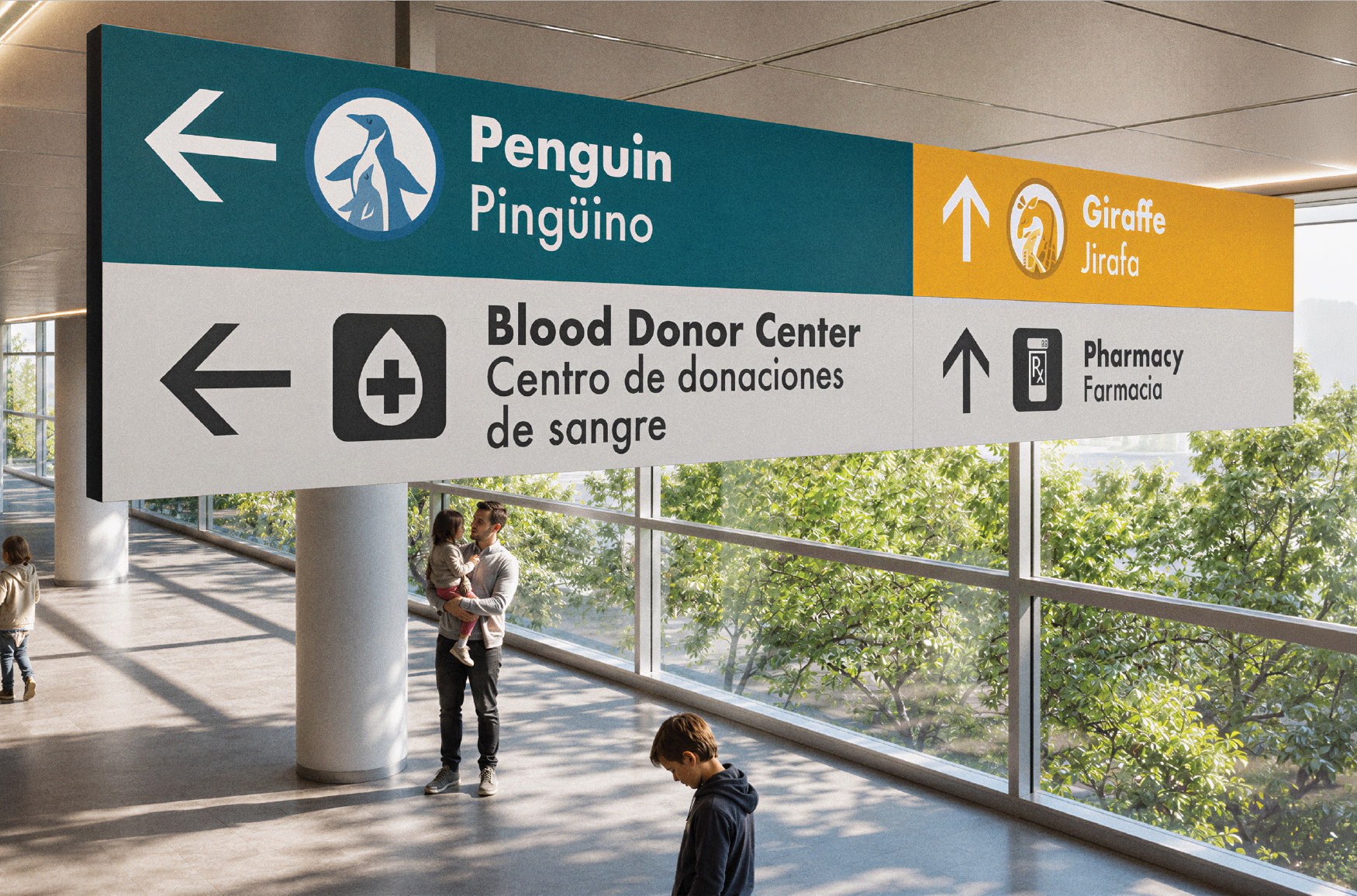
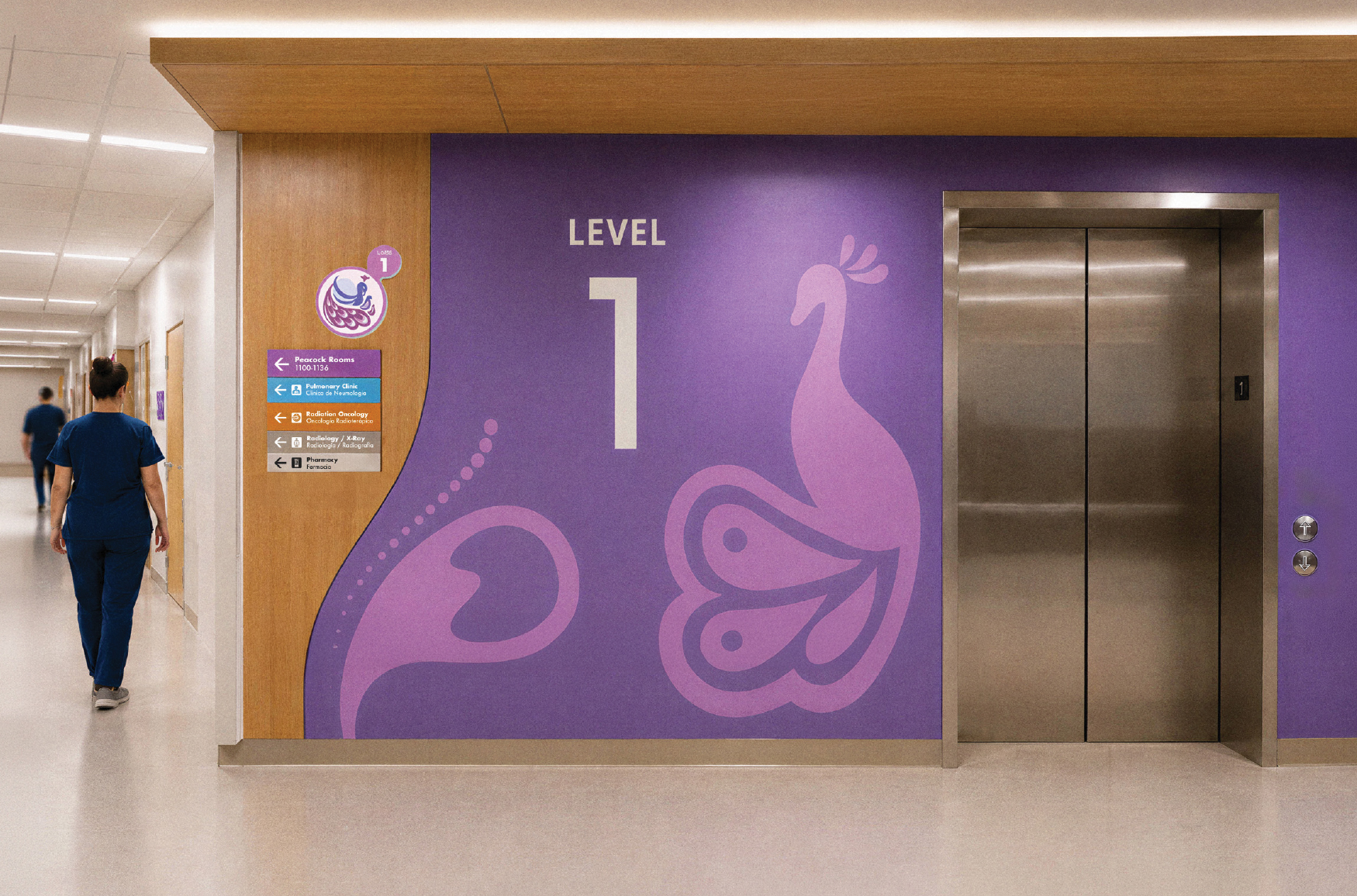
When design projects are driven by preference rather than principle, inconsistency wins. Not deliberately, because no one sets out to create a fragmented patient experience, but inevitably, because preferences change with context. The executive who loved the calming color palette in the boardroom presentation feels differently when reviewing the budget. The clinical director who agreed to open, welcoming waiting spaces reconsiders when the infection control team weighs in. The wayfinding system that made perfect sense to the design team becomes baffling to a first-generation immigrant navigating it alone at two in the morning.
These are not failures of intelligence or intention but, rather, the predictable result of making decisions without a stable, shared standard for evaluating them. Principle Centered Design serves as a solution to this challenge not by eliminating disagreement, because realistically it can’t, but by giving disagreements a place to live. When a decision is contested, the question is no longer “whose preference wins?” It is “which option best serves our principles?” This question has great value and can be answered.
Principles As A Human Promise
A design principle is a statement of what truly matters, written to help guide decision-making. It is not a value. While values are important, they are too personal to adjudicate between two competing options. “We value compassion” does not tell you whether the check-in desk should face the entrance or the corridor. “Each person who walks through this door should feel recognized before they feel processed” does. The difference is specificity, and specificity is what makes a principle useful.
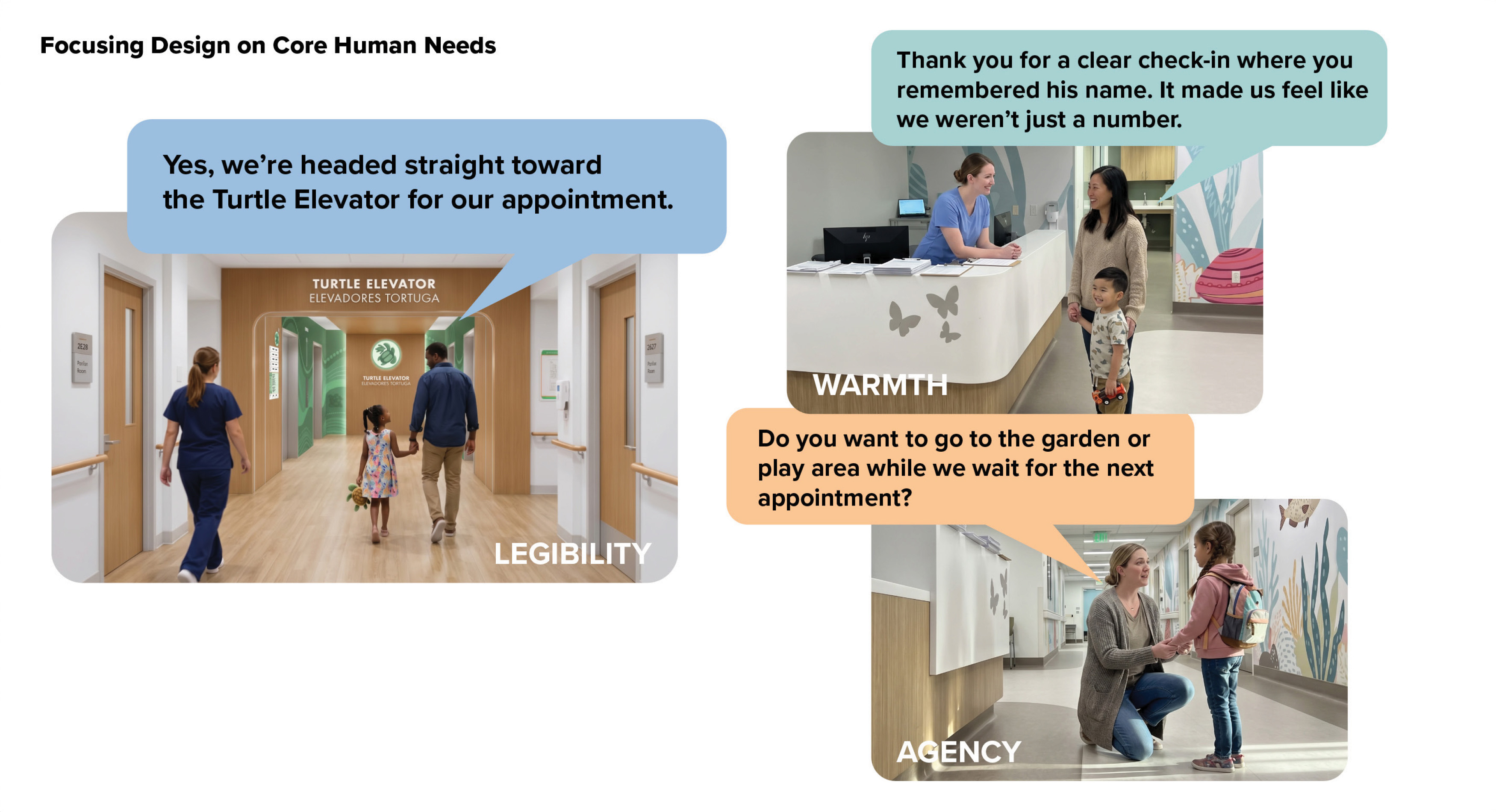
Dignity-leaning design principles focus on several core human needs:
Safety: The environment communicates that nothing bad will happen here.
Legibility: I understand where I am and what to do.
Warmth: Someone here cares that I am a person, not just a patient.
Agency: I have some control over what happens to me.
Respect: My time, my body, and my story are treated as valuable.
Not all projects will foreground all five, but each project that aims to design for dignity will need to take a clear position on each of them, and that position should be expressed in principles specific enough to drive decisions.
Involving People Who Know
The most powerful design principles are not written by designers. They are co-created with the people who will live inside the design: the patients, families, and frontline staff who engage with patients each day. These are the people who know what it feels like to sit in a waiting room for hours with nothing to look at but a television playing cable news. They know what it means to be called by a number instead of a name. They know what it costs, emotionally, to ask a stranger for directions multiple times in a hallway and still not find the department they need. Their knowledge is critical information which can strengthen the principle-development process.
When principles develop collaboratively, two things happen. First, they become more accurate, because they reflect actual experiences in the environment, not a designer’s hypothesis. Second, they become more durable, because the people who helped create them feel a sense of ownership and are more likely to advocate for them when the pressure mounts to compromise them.
Designing for Dignity: Part 2 Coming Soon
Learn more about RSM Design’s approach to healthcare design ›