A Mind in Motion: Cognitive & User Journey Maps
Posted May 15, 2026 · Education
BY SUZANNE REDMOND SCHWARTZ, FOUNDING PRINCIPAL
The experience of a built environment is a mental phenomenon shaped by how the brain builds and updates its internal understanding of a place in real time. Before users are able to process a sign or follow an arrow, the human brain is gathering data, forming impressions, and beginning to subconsciously orient itself within the environment. This process, known as mental or cognitive mapping, is the invisible foundation of each experience a designer creates.
Understanding how people think, move, and feel as they navigate a space actively informs each design decision within a project. Cognitive and user journey mapping as a practice consists of designing wayfinding and navigation systems that keeps the user journey intuitive, welcoming, and clear, allowing visitors to feel confident and connected within a space. This process requires a great deal of investment in detail, research, and gaining a systems-level understanding of how various design disciplines interact within the built environment.
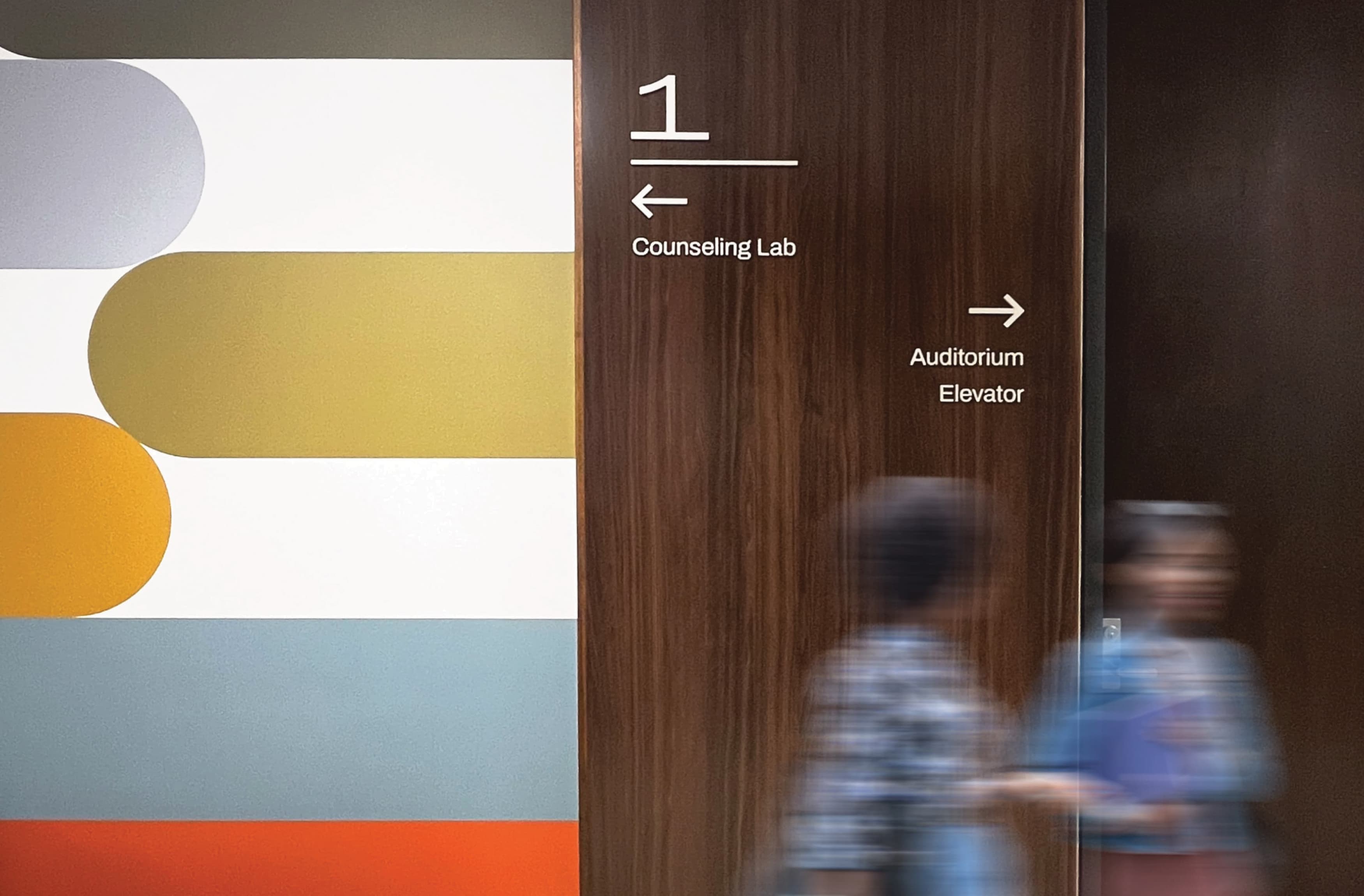
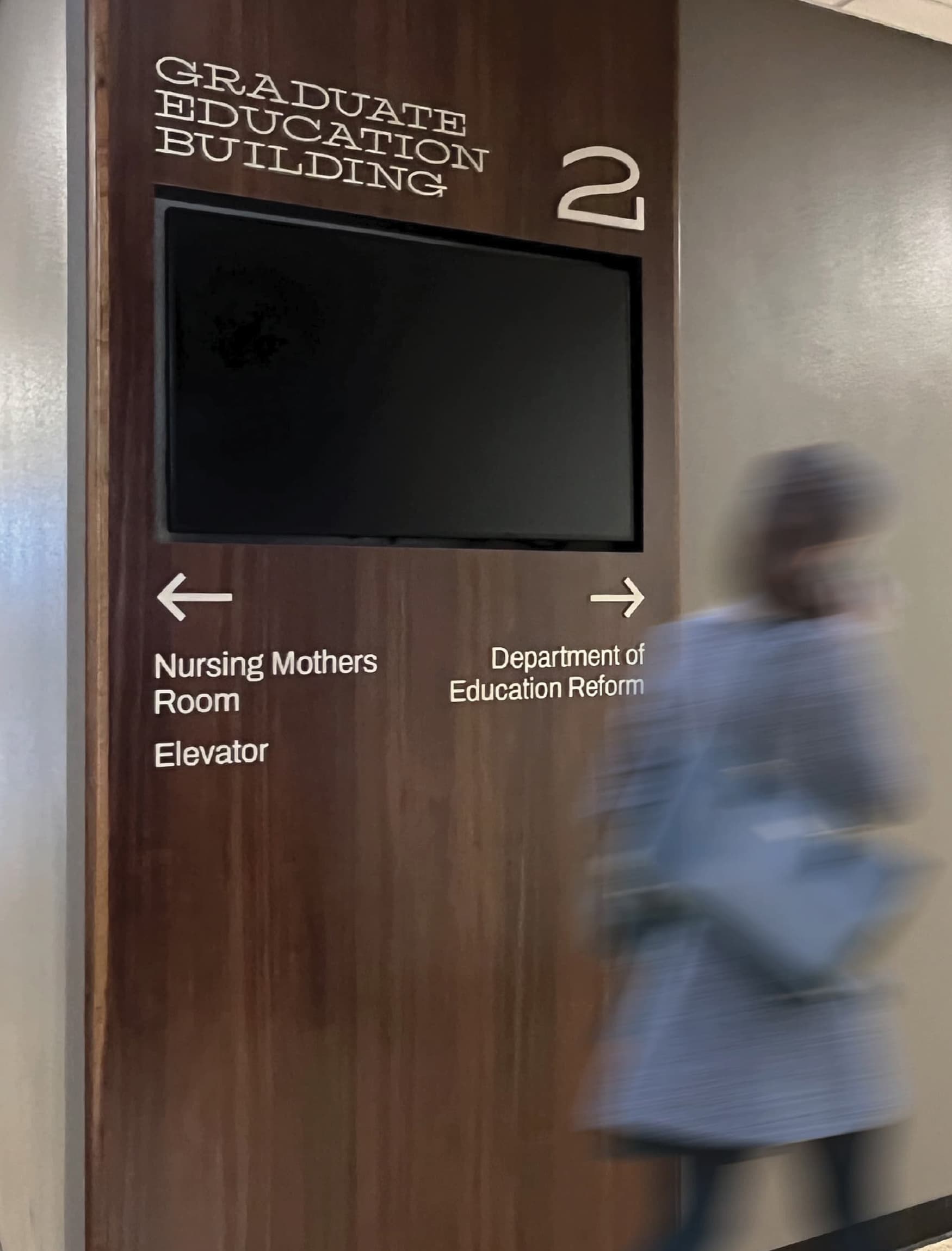
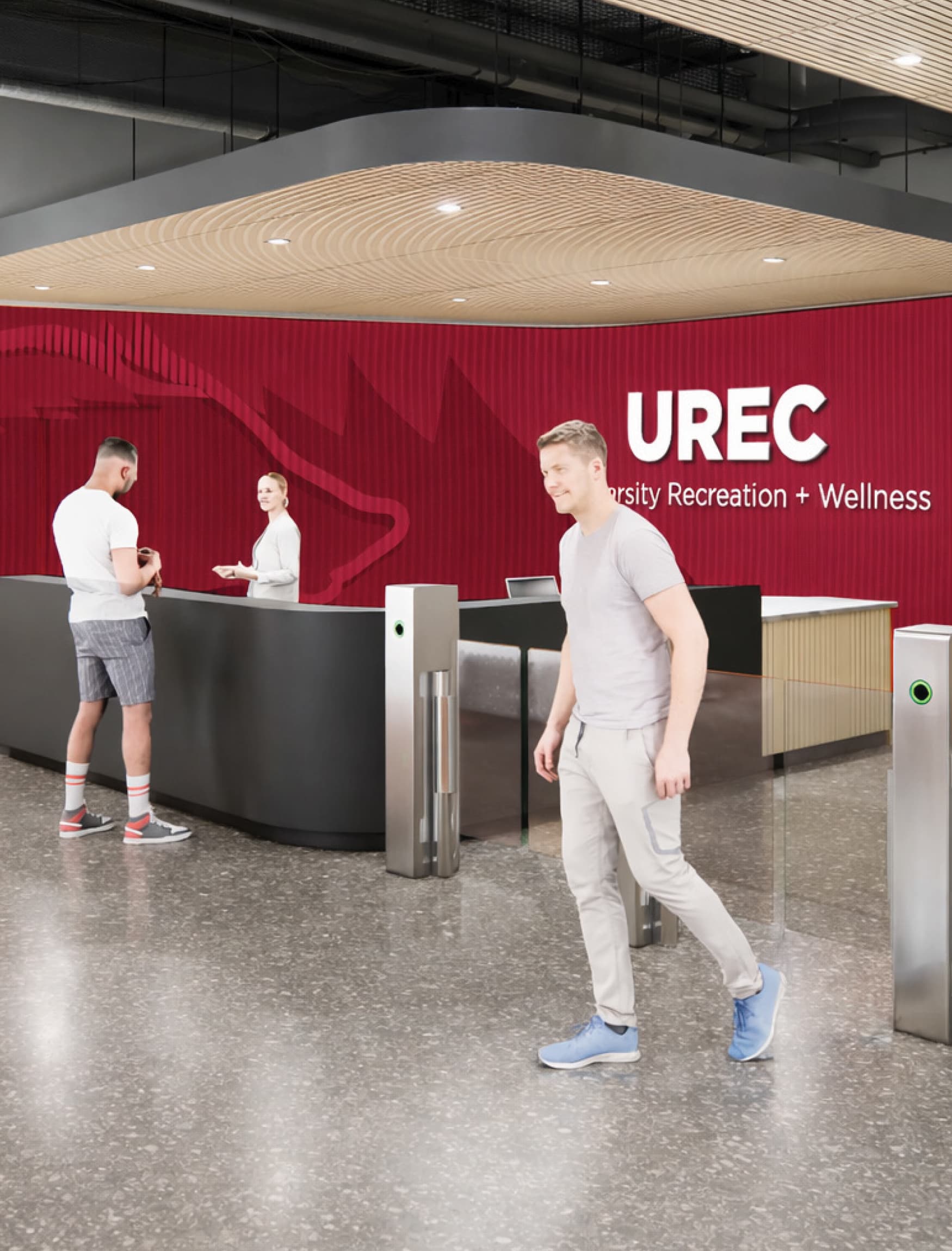
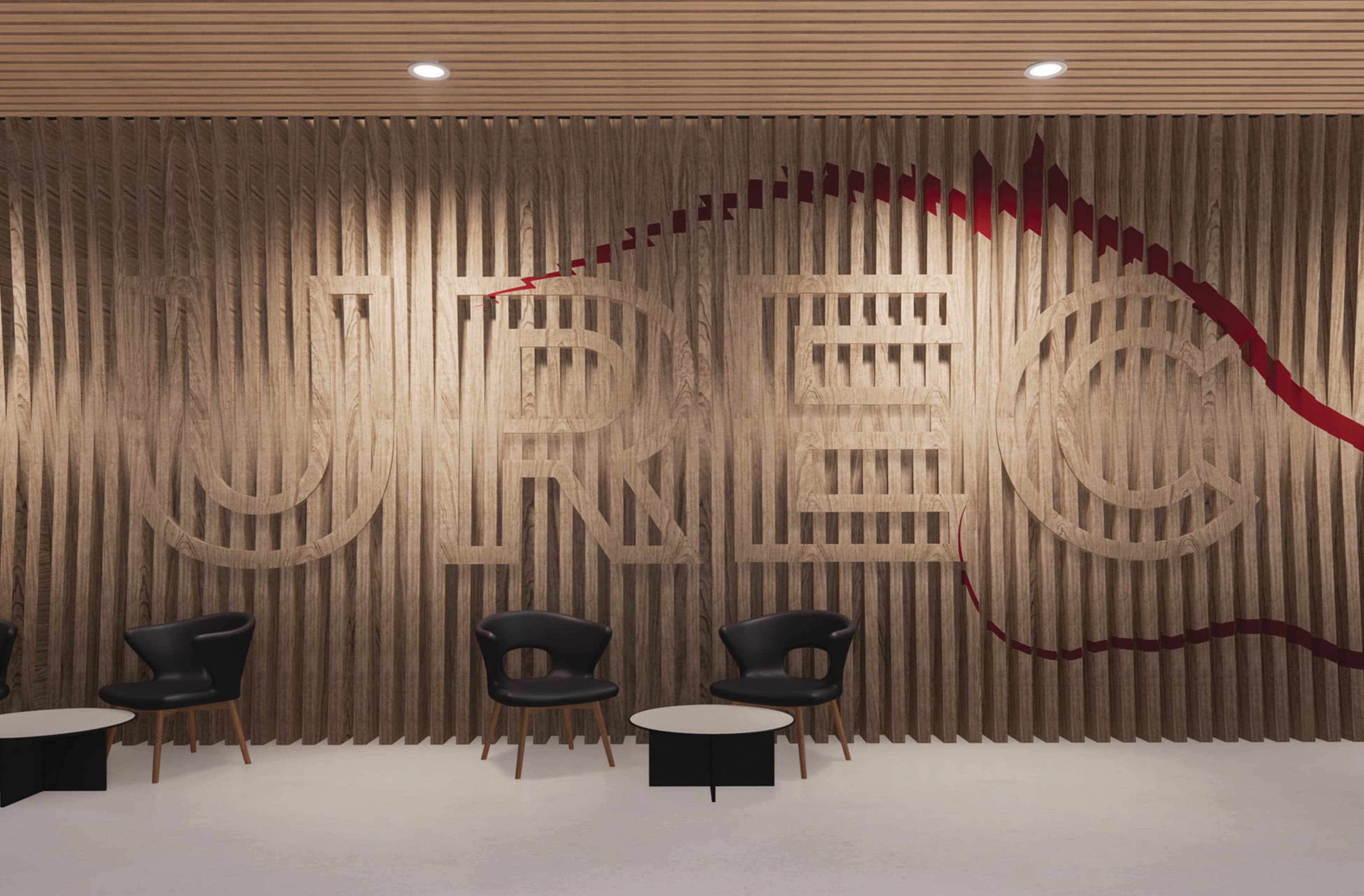
Graduate School of Education (top), University Recreation + Wellness Building (bottom), University of Arkansas, Fayetteville, Arkansas
Understanding The Mind as a Mapmaker
Long before GPS, humans have been sophisticated navigators, orienting themselves in the built environment. In Kevin Lynch’s landmark book, Image of the City, he identified five key elements that help people intuitively understand their environment. These were paths, edges, districts, nodes, and landmarks. Today, people continue to build internal maps as they move, updating them with each new piece of information the environment provides. People remember places not as floor plans, but as sequential experiences: the captivating graphic that stops them in their tracks, the wayfinding that makes them feel at ease, the inspiring mural that anchors a communal area. Building on Lynch’s intuitive user journey model, RSM Design translates this innate understanding of place into a layered system of wayfinding and environmental graphics that incorporates each of his five key elements within the overall design solution.
Designers who understand the cognitive mapping process work to create distinct elements that intuitively support and guide the user journey. They are tasked with tracing the path a person takes through a space, not just physically, but emotionally and mentally as well. Designing with cognitive mapping in mind prioritizes effective visual and directional cues that address what people see and experience when they first enter a space, along with each subsequent decision point they encounter throughout the journey.

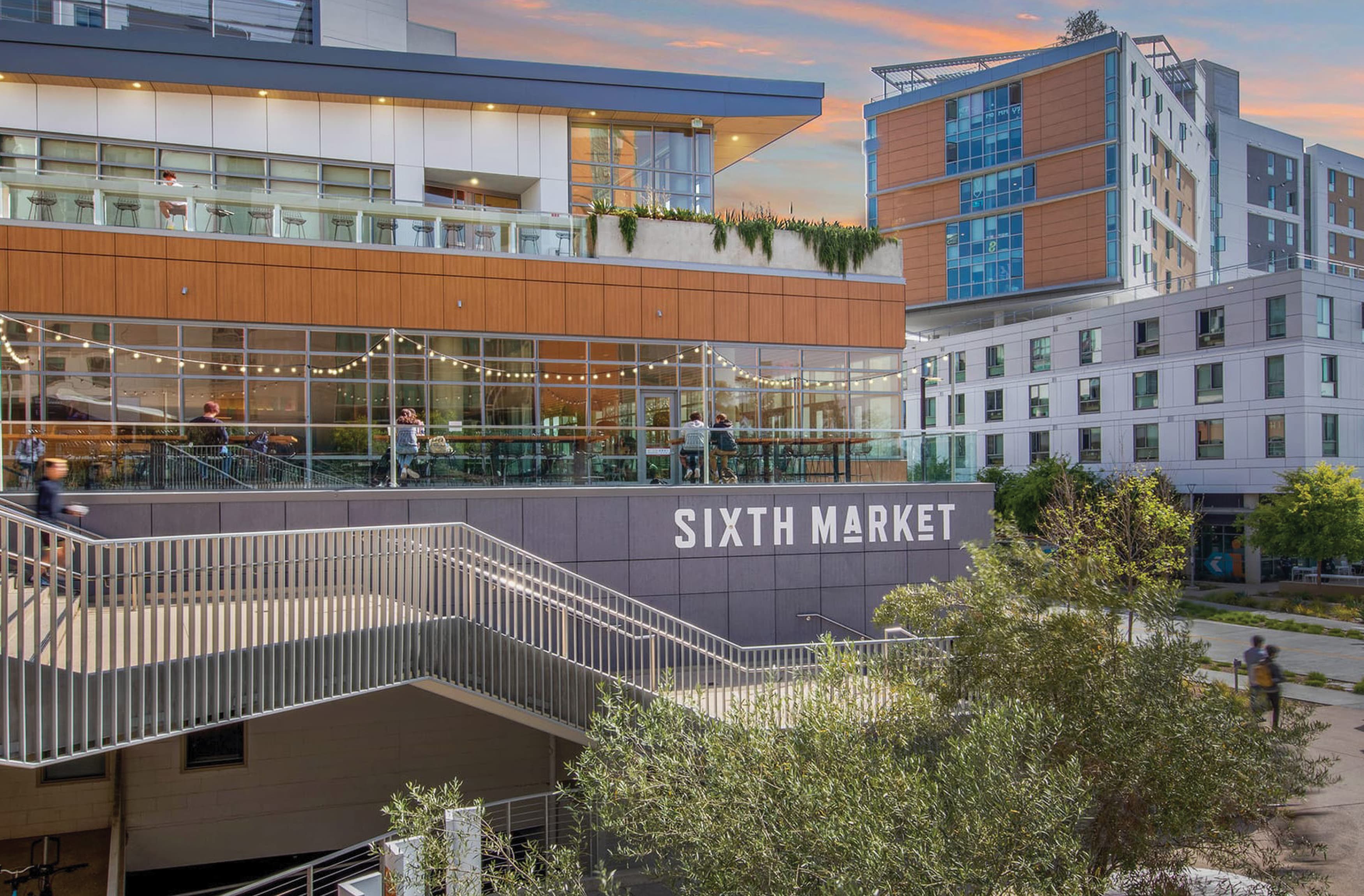
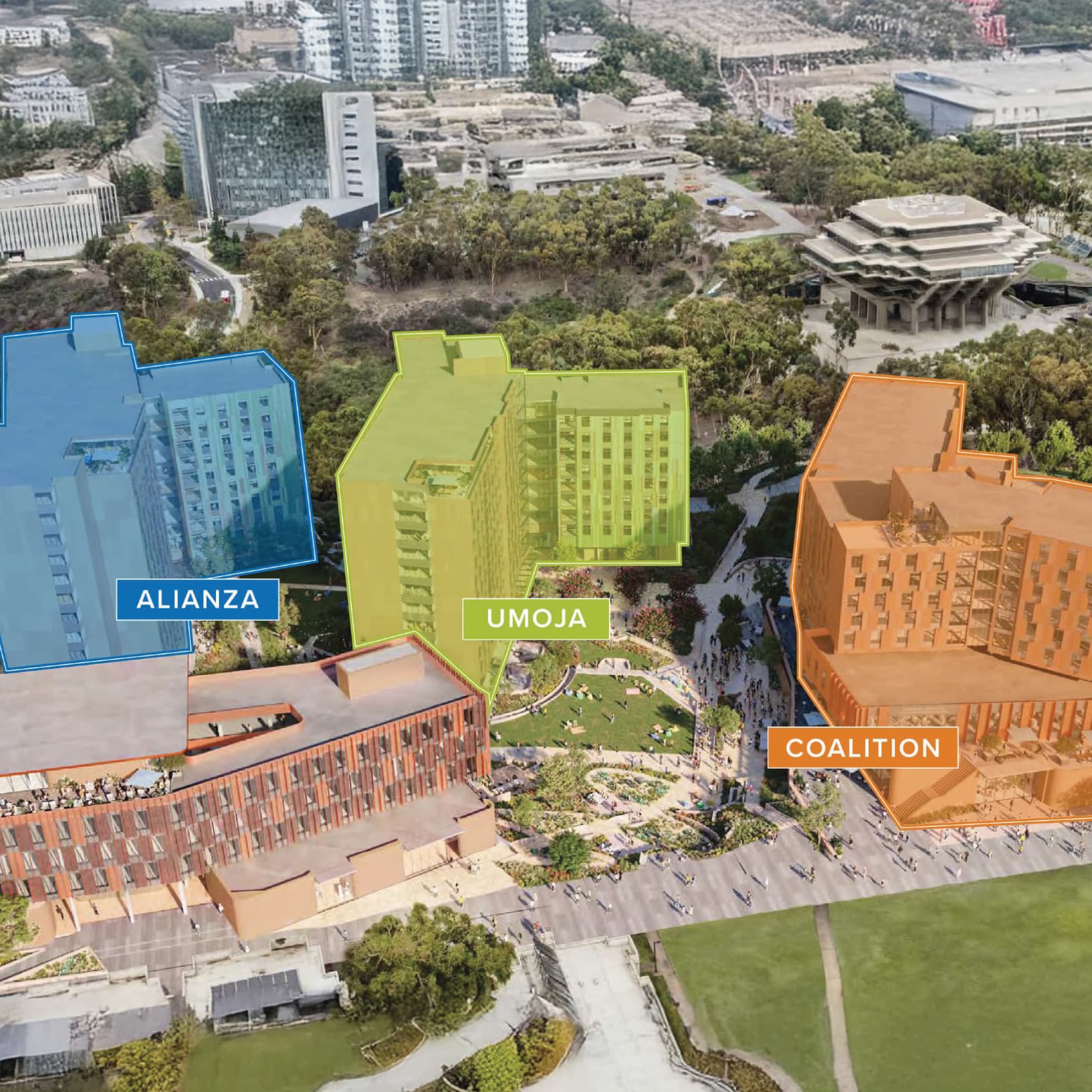
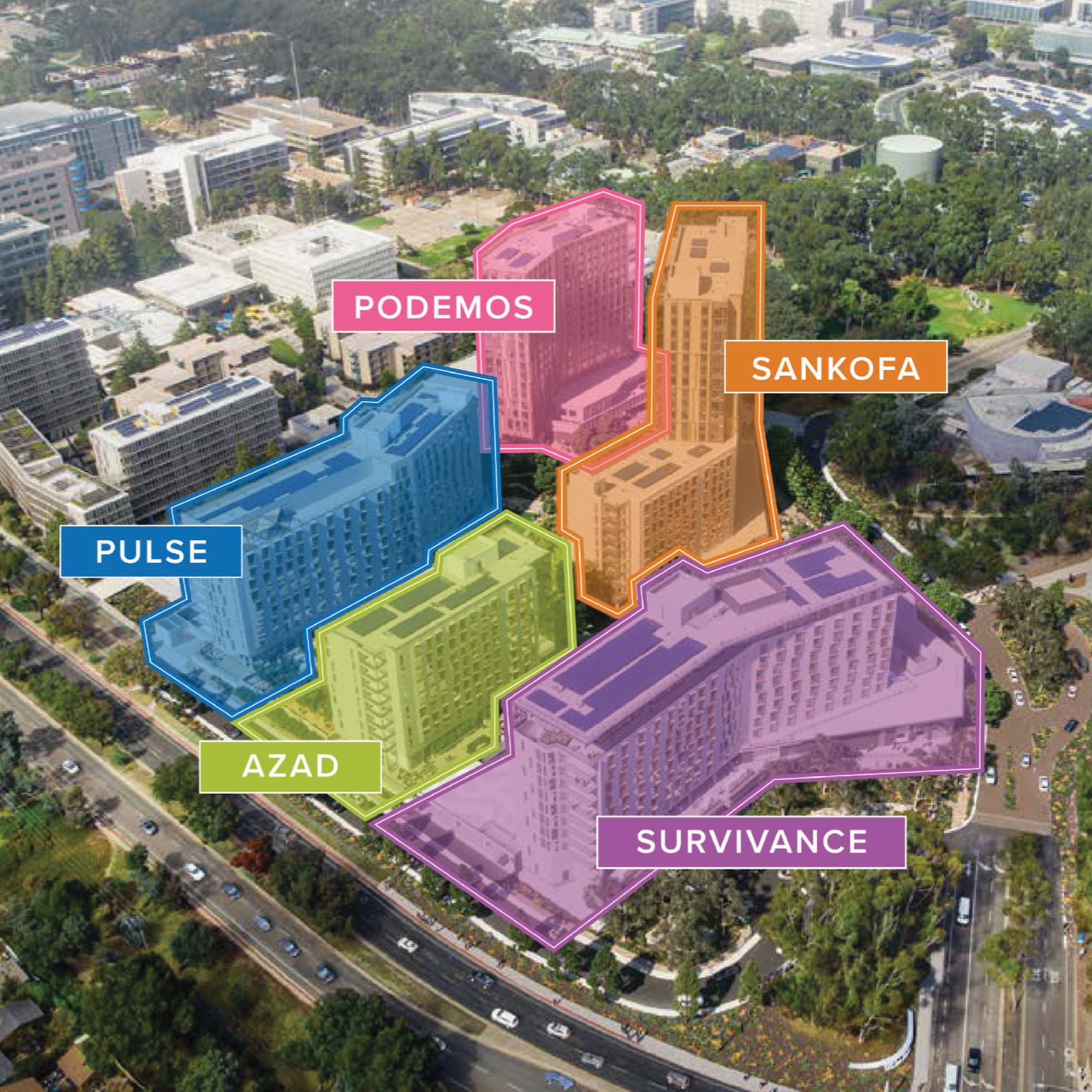
Building Naming (top), Dining Hall (bottom), UC San Diego, San Diego, California
Educational environments: Crafting Spatial & Narrative Journeys
On student campuses, spanning classrooms, auditoriums, recreation centers, dining halls, and study spaces, cognitive and user journey mapping become essential to how people learn, move, and belong. A campus is not a collection of buildings but a living narrative that unfolds with every step. Each student, faculty member, and visitor becomes both a wayfinder and a participant in a shared story of place.
Cognitive & Experiential Mapping
Journey mapping in educational environments begins by identifying the arc of the experience, considering what a student may or may not know when they first arrive at a place and what they might want to feel, discover, or carry with them when they leave. From that narrative baseline, designers work backwards to create touchpoints that deliver a sense of place sequentially and at the appropriate pace.
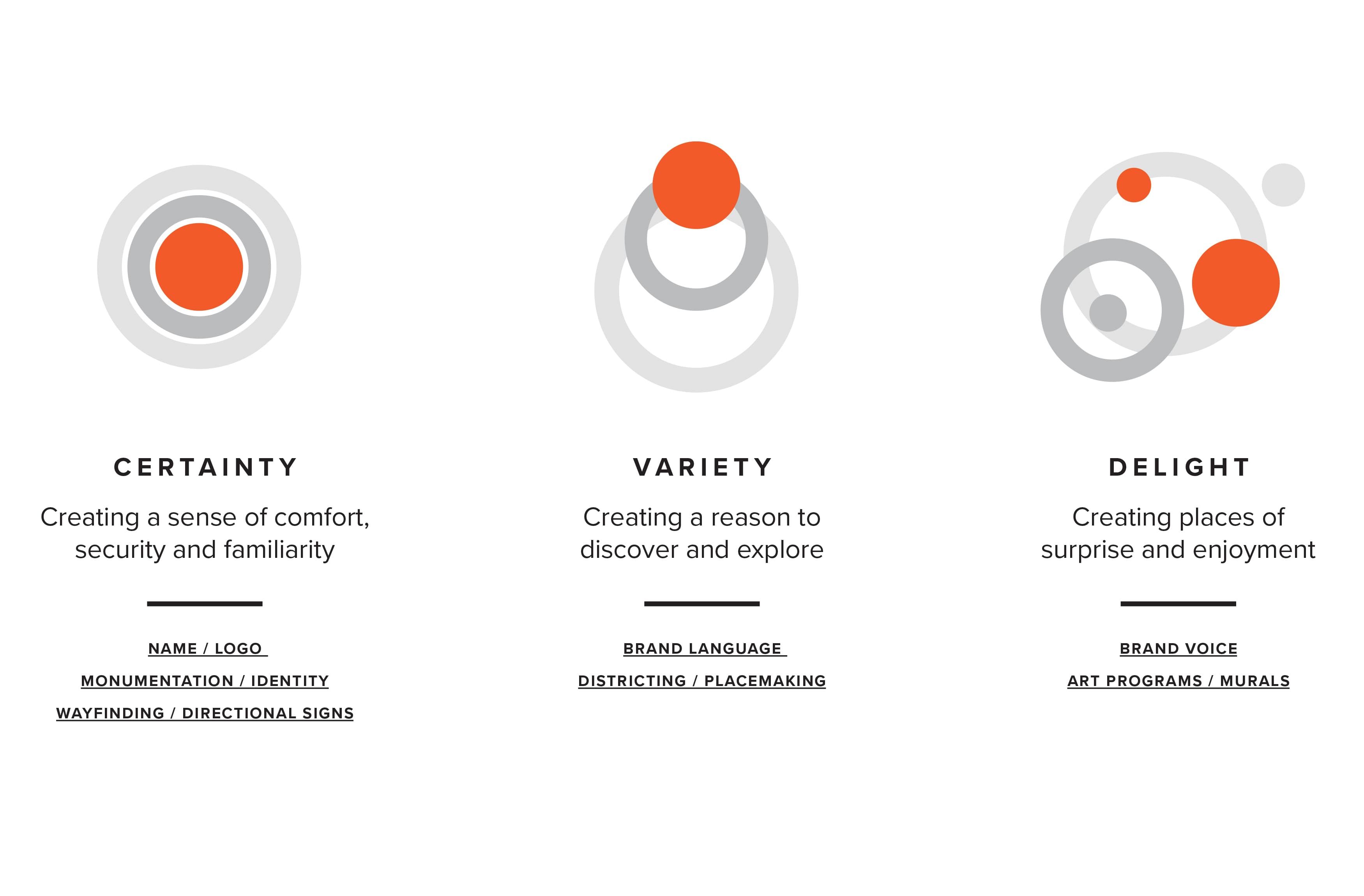
Effective campus design provides three things in concert: Certainty, Variety, and Delight. Certainty gives students confidence. They understand where they are on campus and where their path leads. Variety breaks the environment into distinct chapters, using scale, color, form, and material to signal transitions between spaces and maintain engagement. Delight introduces unexpected moments that students can use to reorient themselves as they move through campus life.
Physical Sequencing
The physical sequencing of an educational campus must also account for discovery behavior. Students and visitors follow predictable patterns as they move through an envrionment, and understanding those patterns allows designers to keep them engaged and inspired to explore.
Campus environments are full of potential moments that go unnoticed when left unplanned. Journey mapping gives designers the tools to surface those moments intentionally, turning overlooked corners and transitional spaces into opportunities for connection, orientation, and delight.
The growing integration of digital experiences into physical campus environments makes this work more complex and more consequential. Digital touchpoints, interactive kiosks, and wayfinding apps must be choreographed into the user journey and layered atop physical elements. When digital and physical experiences are aligned, they amplify cognitive clarity and direction throughout educational environments.
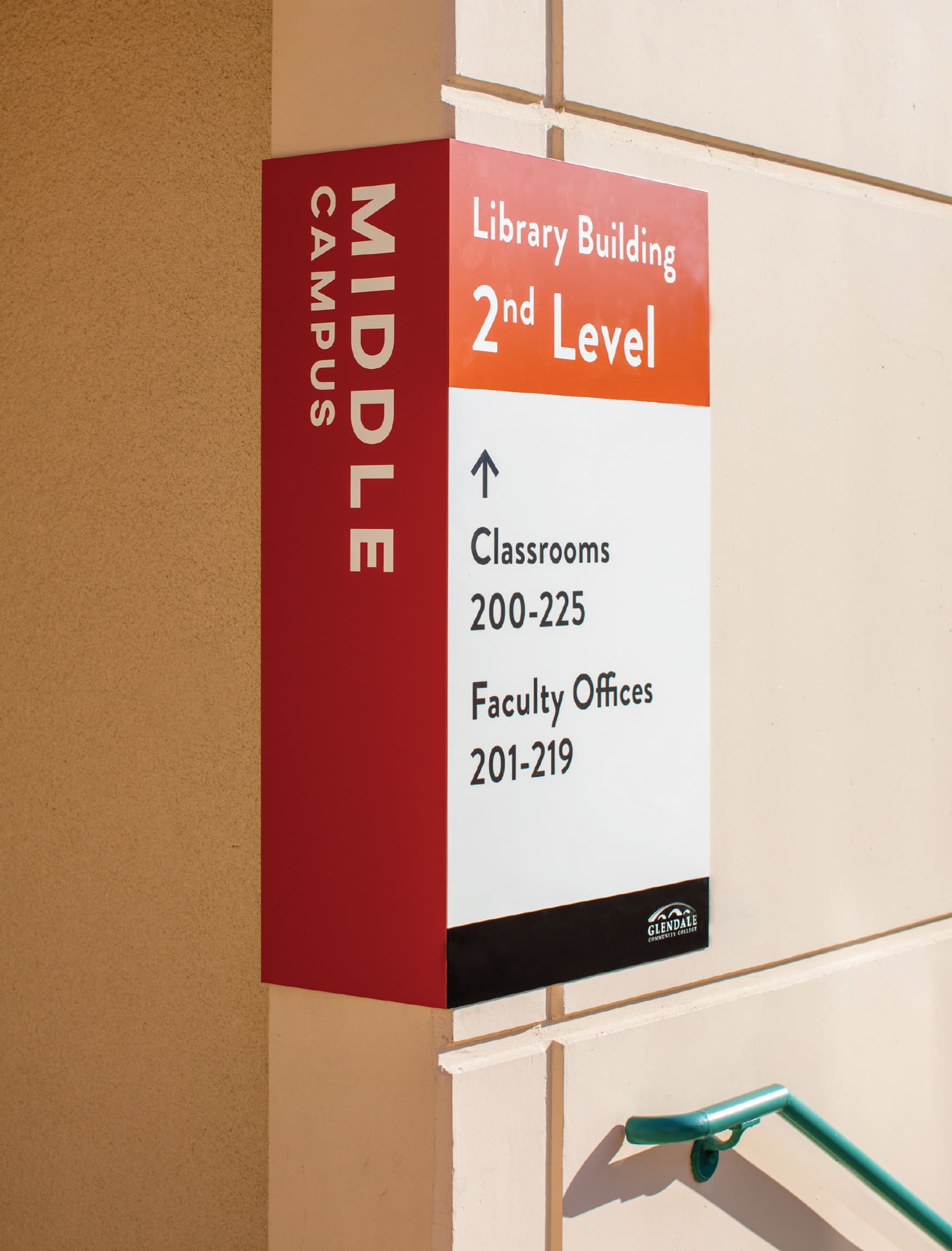
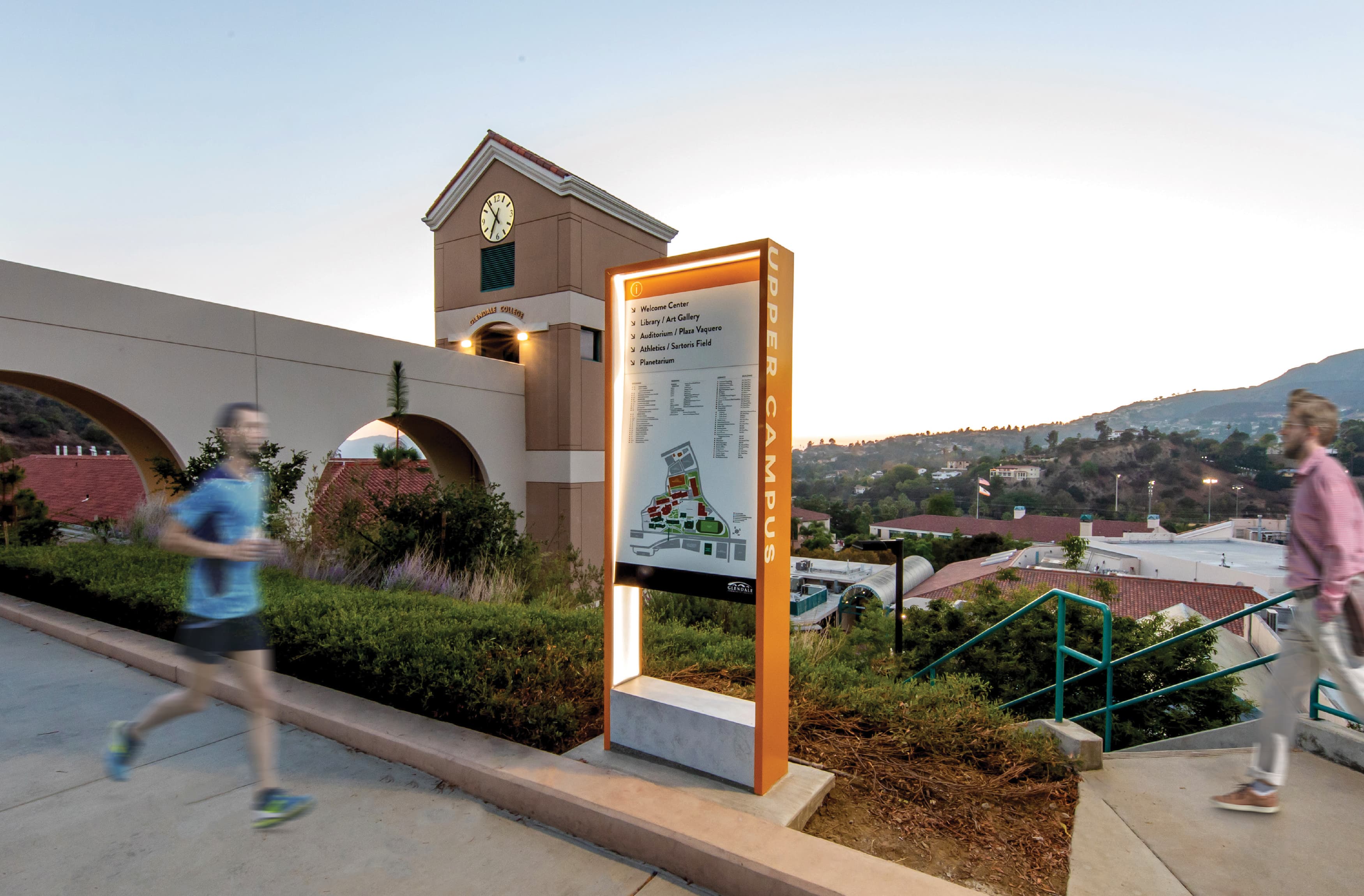
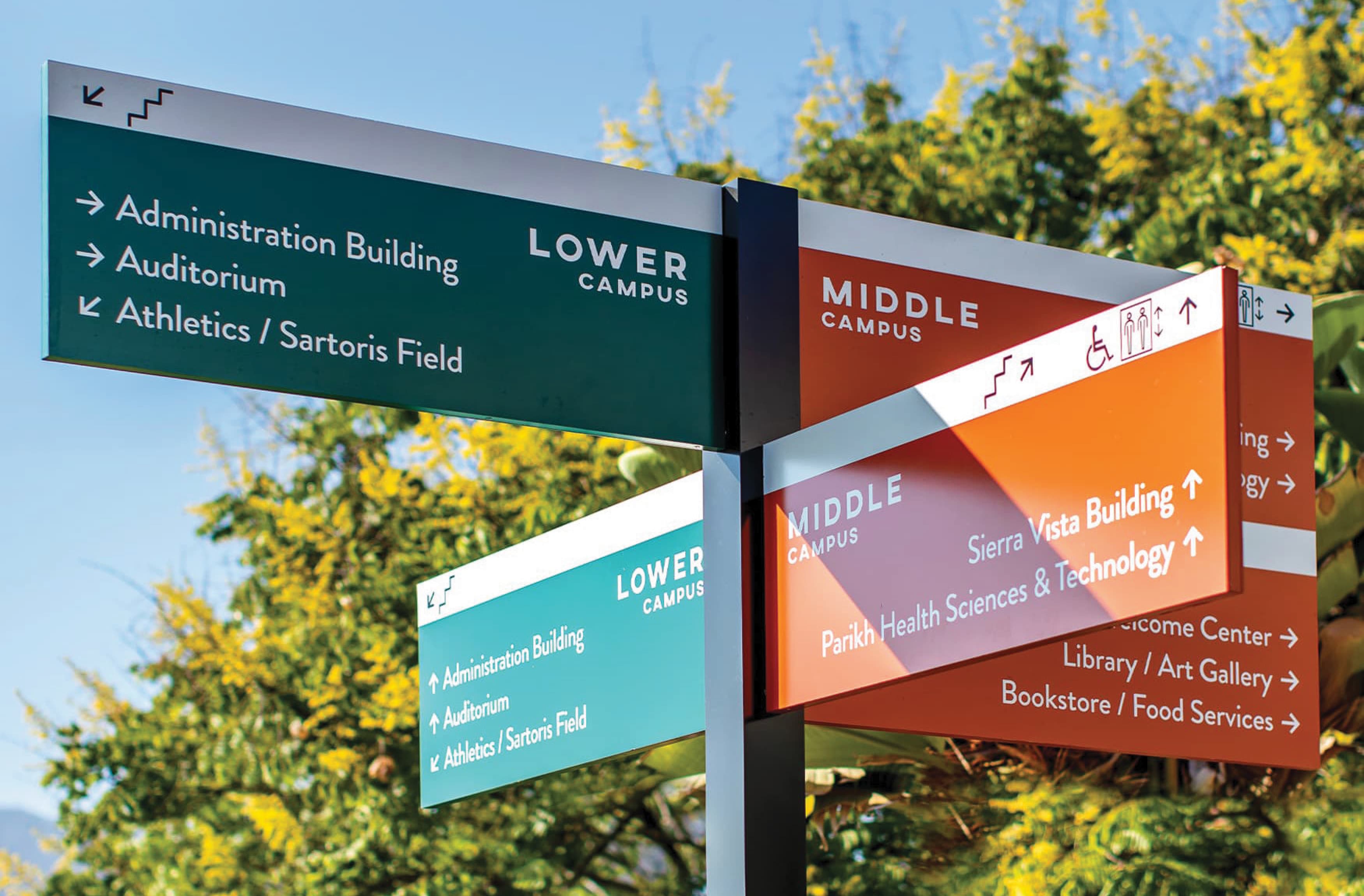
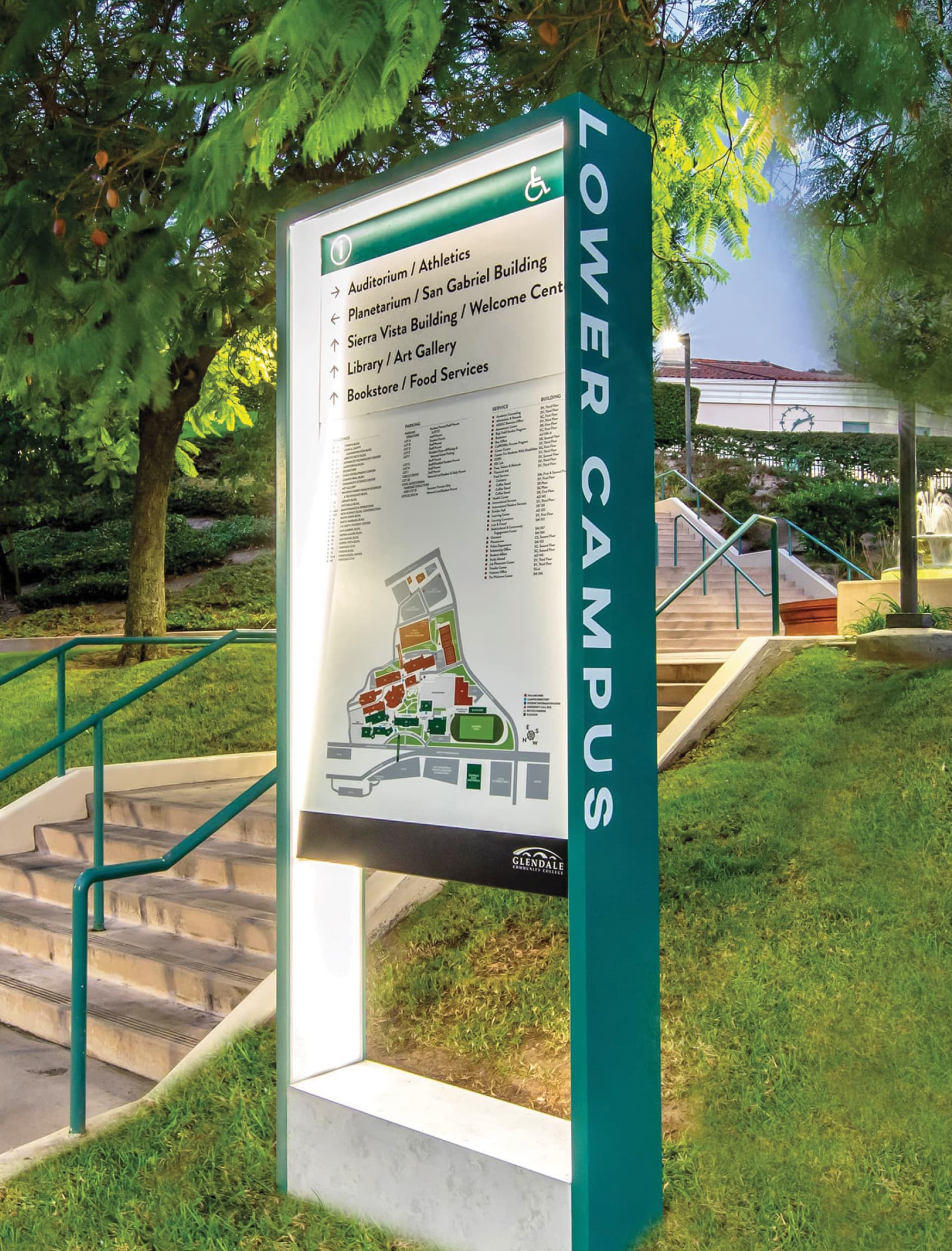
Glendale Community College, Glendale, California
Wayfinding: The Architecture of Orientation
Wayfinding is a comprehensive system of orientation, a set of experiences working together to help people understand where they are, where they can go, and how to get there confidently. Signage is one element of that system, working alongside architecture, landscape, lighting, color, art, and material composition.
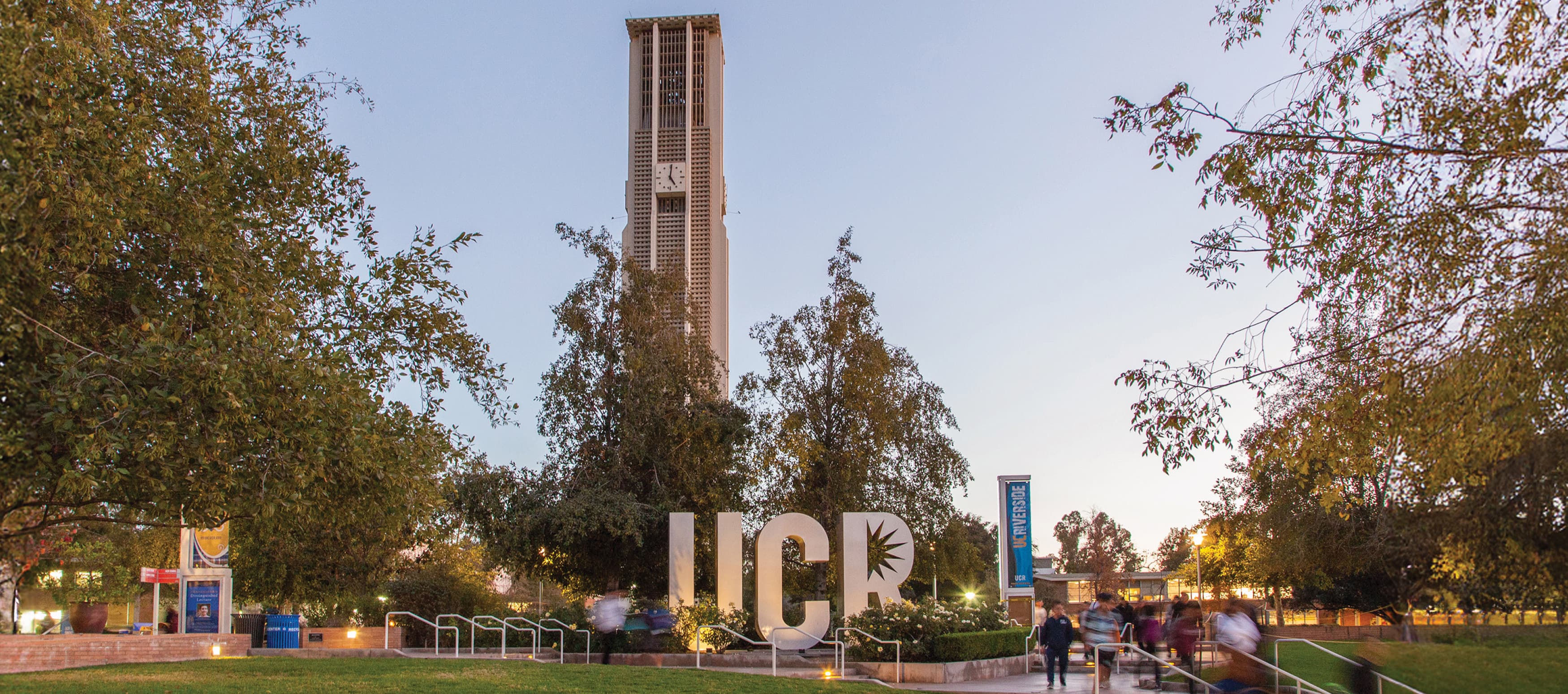
The most effective approach to wayfinding begins with analyzing movement patterns and applying them to cognitive and user journey mapping initiatives. Designers work to identify the decision points in an educational environment and determine what information a student or visitor might need at each of those moments. This process also considers how the broader design of a space can carry as much navigational weight as signage itself. A bold architectural feature at the heart of a campus, a plaza, a tower, a distinctive gathering space, can become the landmark that anchors each subsequent direction a person is given.
When wayfinding design is working correctly, navigation feels intuitive, appearing as a natural consequence of the environment rather than a system imposed upon it. This involves a partnership between the related disciplines of architecture, landscaping, lighting, and signage. The wayfinding program is, in effect, a choreography that sits across design disciplines and ensures that each element of the built environment is pulling in the same navigational direction.
This multidisciplinary integration is where cognitive mapping principles become powerful. When designers understand how the brain builds its internal map of a place, they can shape that map intentionally, embedding landmarks and creating visual cues that both guide and delight.
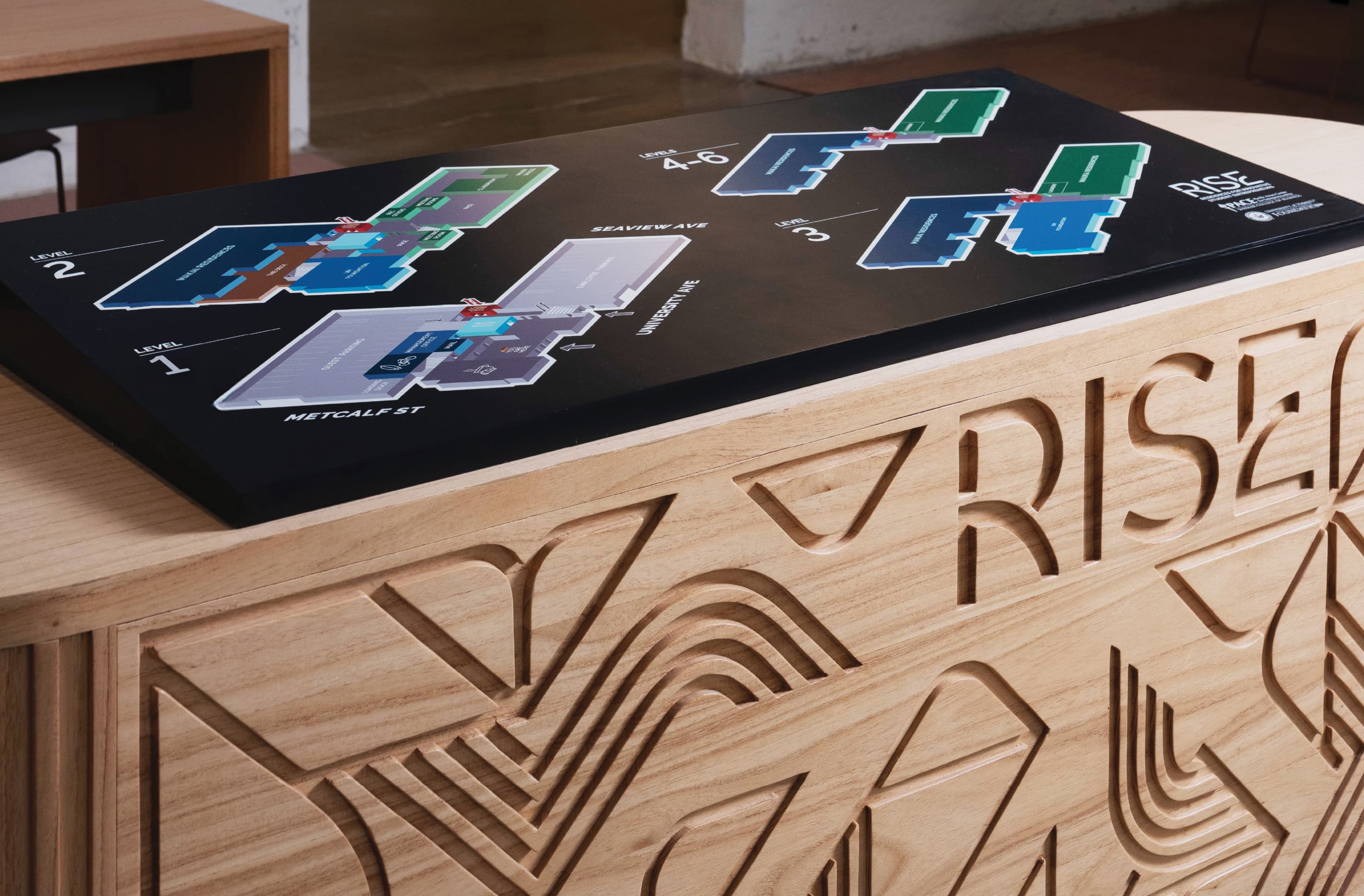

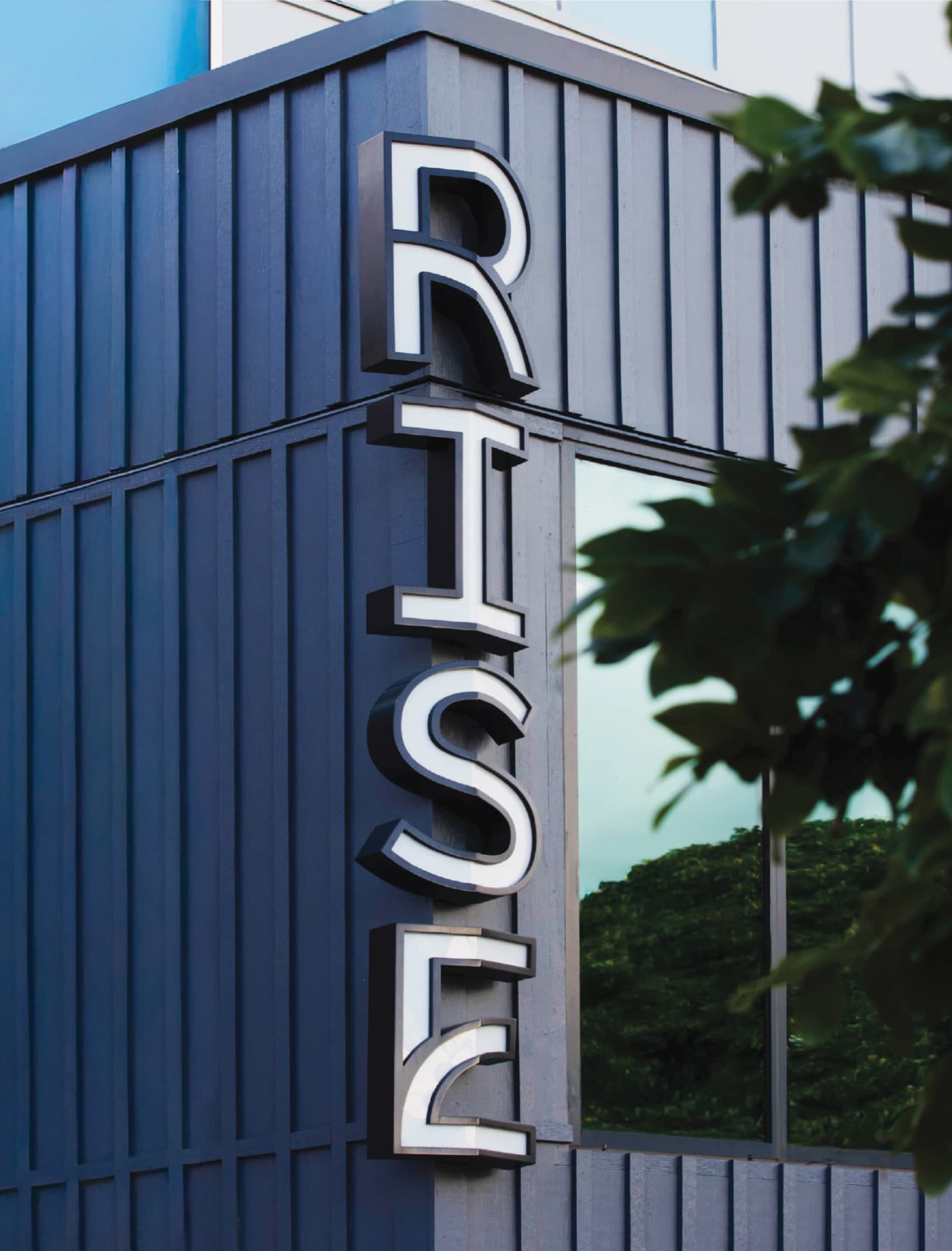
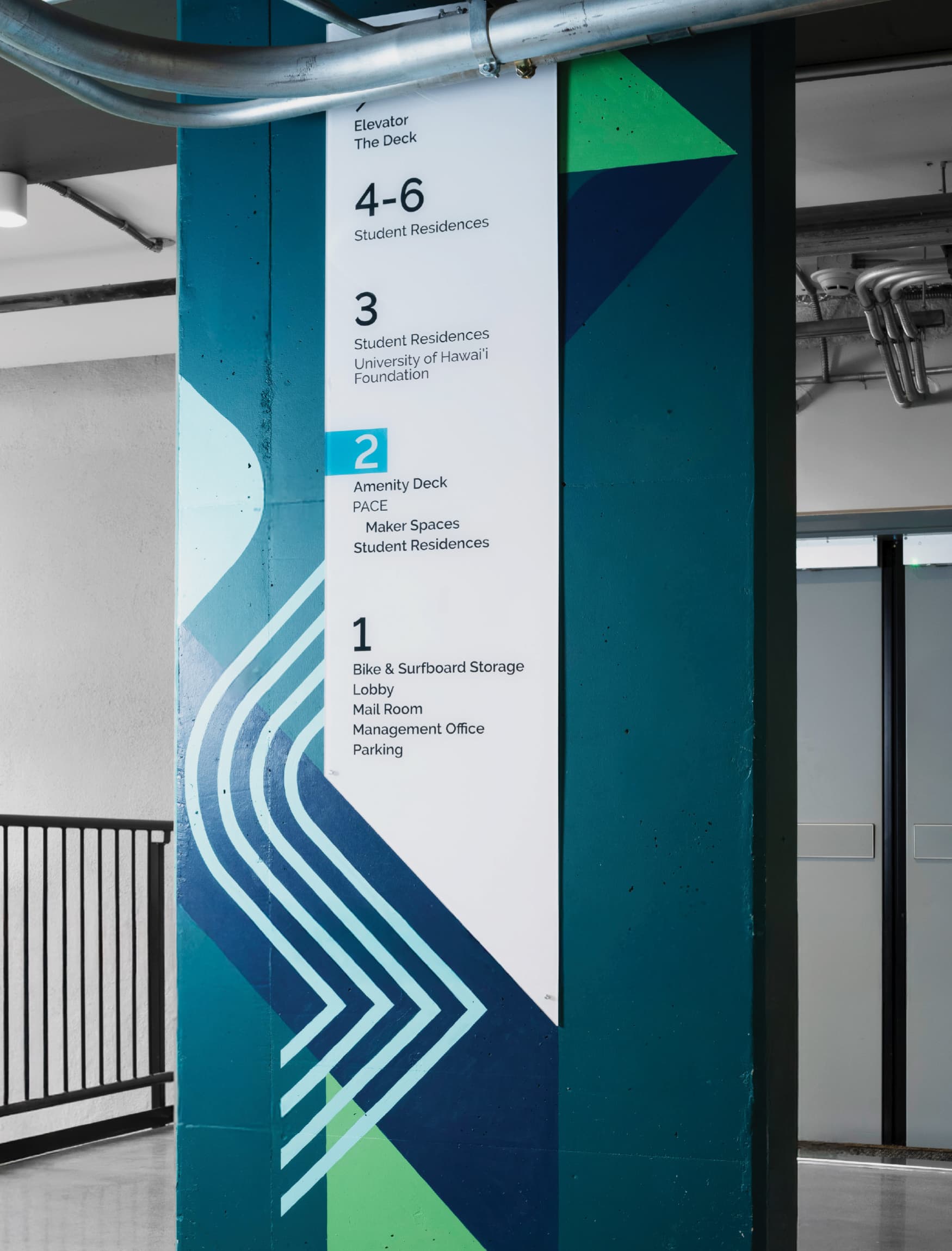
Atherton Rise, Honolulu, Hawaii
The People-First Principle of Cognitive Mapping
What unites educational environments and wayfinding is a shared commitment to putting people at the center of the process, creating spaces built for communities and the students, faculty, and visitors who move through them each day, each arriving with their own unique needs, expectations, and emotions.
Cognitive and user journey mapping invites designers into the full campus experience, to walk the path, ask emergent questions, and feel the friction or flow of a space as a student would encounter it for the very first time.
This people-first approach has shaped RSM Design’s work for nearly three decades, spanning a wide range of sectors and project types. Design tools evolve and project contexts shift, but the foundation doesn’t change: design begins with uncovering the unique needs of the people who interact with an environment, and it results in transforming spaces into experiences that enrich and inspire.
Read A Mind in Motion Part 2 ›